> No one wants to hire them at a high minimum wage, especially when locals are readily available
The main drawback to a minimum wage is that it artificially increases the cost of labor, to the point where it's no longer worth it to an employer to hire a low-output employee. I think we'd all agree that increasing employment is a good goal, but an increased minimum wage actually hinders progress on that front. As the minimum wage increases, robots and other non-human investments start to look much, much more attractive. Many businesses would be happy to hire workers for less than minimum wage, but legally cannot, and so do not hire.
Of course, it's a complicated issue. Look at the employment of those with disabilities like Down Syndrome [0], for example. Are these employees worth hiring at $7.50/hour? No, for the most part, they're not. Are some? Sure, but on average there's no way. But are they worth hiring at $2.00/hour? Yes, and they and their families are willing for them to work at that wage, because there are huge benefits to being productively employed.
Recently these programs are coming "under attack" in various states. New Hampshire just made this practice illegal, for example [1]. We'll see how it plays out -- my bet is that a) few news outlets will follow up in a few years and see how many of these disabled workers are able to find new employment, and b) few disabled workers will be able to do so.
The counter argument is that human labor has an actual cost. That is the cost to keep a human alive and in some level of comfort. Government benefits of many different types have "artificially" lowered this cost. Where employees refuse to pay enough for a human to live on, the government picks up the slack. Raising the minimum wage may be "artificial," but its not the first control placed on some otherwise natural labor market.
Doesn't that argument apply to any government spending? If my enterprise relies on roads existing, and I cannot pay the full costs of maintaining the roads, say. (Ah, but roads benefit others, and we should only calculate your share! But welfare benefits others as well, it's a collective funding, so the same applies.)
Interesting what you've given us to consider, in regards to "charity benefiting its owner", to suggest these two things as comparable:
    (1) insufficient wages (per Adam Smith) as set by private enterprise

    (2) private enterprise usage of services/infrastructure as provided by government above and beyond their share of taxes
My point was the reverse, actually. We're fine with companies benefiting off roads, because they pay taxes. Roads are a public good funded with public funds. I think we should be just as fine with companies benefiting from the public good of welfare. If we don't think it's a public good, we shouldn't fund it.
Now, if they were directly contributing to an increase in public funding, then we might wish to discourage that. But if they wouldn't hire the worker, they would necessarily be paid less or not at all (else they would quit; abstracting away from inefficiencies which may make this inaccurate). So Walmart's decision to offer a wage that's the best the worker will get, yet is not livable by itself, still benefits the government, because otherwise the entire cost falls on the government. Mandating a minimum wage, and letting those workers become unemployed, just makes things worse.
Of course, this assumes that increasing the minimum wage leads to a decrease in jobs, which is itself controversial.
> Mandating a minimum wage, and letting those workers become unemployed, just makes things worse.
I'm not sure what you mean by "My point was the reverse" - "public good" is not charity I guess?
I'm trying to wrap my head around how a less-than-living wage is a necessity for certain kinds of industry to function profitably, and that, furthermore, indirect government subsidies to them via handouts are essential enablers. Is it that consumers perpetually undervalue the products of retailers and restaurants? Or is it that without the subsidies many retailers and restaurants would face much "pent-up demand" (as economists may call it)?
Frankly, for money to have any meaning to it, this situation must somehow have a cash-flow that at minimum breaks even. I.e., if these industries are gainful, that gain should somehow be reflected in the tax revenue back to government, the compensations to executives, the dividends to shareholders, etc. Which means if this is a good deal for the government, does it at least breakeven on the handouts it has made? Not sure if that is happening - there's certainly plenty of think-tank whitepapers available that declare social programs as unsustainable (e.g. http://budget.house.gov/uploadedfiles/rectortestimony0417201...).
But here are some fun factoids: From http://www.marketwatch.com, I get for McDonald's a net income about $5 billion on revenue over $25 billion; for Walmart it's a net of $15 billion on revenue over $480 billion. marketwatch.com also shows revenue per employee of $60,507 for McDonald's, and $209,622 for Walmart. So there's money to be made in cheap food and cheap goods. So, let's see, a $5/hr increase for a 35 hr workweek and 50 workweeks in a year comes to a $8,750 hit to the revenue per employee amount. So maybe a 14% increase in the price of fast-food burgers and 4% increase in white socks?
So in light of growing government deficits, growing corporate profits (well, we'll see about 2016 - http://www.bea.gov/newsreleases/national/gdp/2016/gdp4q15_3r...), and reasonable (whitepaper-ishly anyway) suggestions on the unsustainability of the "public goods" collectively known as the "Welfare State", in this discussion on whether wages need to have some sort of mandatory minimum - well, what are we to make of this? Too many economically useless people?
You'd need to increase profits, not revenue. If profit margins are around 3%, you'd need to more than double revenue per employee for Walmart.
And of course, doubling prices makes less sales, so doesn't double revenue, it might even reduce revenue.
Re reverse: you said "above taxes paid" for roads, which I didn't mean to imply.
Regarding your "break even" idea: suppose the most someone's labor is worth is $22500 a year. Suppose the minimum required to live is $30000. The government has decided that nobody should starve, and so any outcomes where this person starves are not to be considered. There are two options: allow them to work for $22500 or less, whatever the market will pay, and pay $7500 from welfare, or forbid them from working, and pay them $30000. I don't see how the second is preferable to the first.
So if you believe that raising minimum wage hurts jobs (an empirical question that has economists on both sides), then you shouldn't support.
The other model you could have is:
Value of labor is $30000, but there's so much labor available that the market will only pay $22500. Then, mandating a minimum wage does raise the amount paid, although it can still have negative effects elsewhere.
Probably both models are correct for different jobs, and the question is which one is more often correct. I'm also neglecting inflation, part time, disincentives to work, and so on.
As I understand it deficits have been shrinking. Where are you getting the growing stat from?
I wonder if we're starting to talk past one another. I'm just a layperson here, but I believe I got the meaning of revenue (http://www.investopedia.com/terms/r/revenue.asp) and net income (http://www.investopedia.com/terms/n/netincome.asp) right. So, revenue is all the money coming in, and revenue per employee really is all money coming in divided by the number of employees. If more money is needed to cover a wage increase, one needs an increase in revenue. Apparently, profit is sometimes synonymous with net income, and sometimes it means what's left of net income after taxes and dividends are paid. In any case, it is not impossible for profit to stay about the same while revenue is increased; that all is dependent on where you're at on your supply-and-demand curve on whether sales are terribly affected by a price increase. E.g., remember when gasoline approached $3.50/gal (http://www.statista.com/statistics/204740/retail-price-of-ga... didn't effect sales by much (http://www.statista.com/statistics/189424/us-alternative-and...). I'm willing to bet that burgers and white socks will move about the same.
>As I understand it deficits have been shrinking
I get where you're coming from, in the past few years deficits have decreased, and considering the mess that revealed itself months before President Obama's inauguration, one would certainly hope dramatic decreases would come and soon. However, I've been around long enough (ok, alive in the 1970's) to remember when deficits began to be so on the minds of people generally and be a general concern. Check out https://www.whitehouse.gov/omb/budget/Historicals, and http://mediamatters.org/research/2015/10/19/new-data-debunks.... Aside from several good years in the Clinton administration, it's been mostly deficits at substantial or significant levels. Pick a reasonable window of time between now and 10 years or 20 years or 30 years ago, and fit a trend line. You'll find the trend is still highly suggestive of increasing deficits (no matter if Obamacare makes these future increases smaller, https://www.cbo.gov/publication/50252 and https://www.cbo.gov/publication/49892 and https://www.cbo.gov/sites/default/files/51118-2016-03-Budget...).
>Regarding your "break even" idea
Yep, it's just my conjecture. But your counterpoint conveniently side steps on just how the government produces the $7500 in your example. Raising taxes? Issuing more Treasury bonds? Perhaps you could elaborate on this?
>I'm willing to bet that burgers and white socks will move about the same.
If that's the case, then Walmart could double their profit now by raising prices. I doubt this.
If you assume revenue goes up without an increase in costs, then yes, but there's little reason to assume that. Walmart carries millions of products, and to assume they can raise the price and not lose sales is wrong.
> But your counterpoint conveniently side steps on just how the government produces the $7500 in your example. Raising taxes?
I had in mind using taxes. I didn't discuss a shift in policy which requires a change in revenue, I was describing the end result. Government raises funds and spends it.
>...then Walmart could double their profit now by raising prices. I doubt this. ...
>If you assume revenue goes up without an increase in costs, then yes, but there's little reason to assume that.
Well, let's review, and please check out my math below. I did some more googling and copy-pasted what I found.
(copy-paste:) Revenue is calculated by multiplying the price at which goods or services are sold by the number of units or amount sold.
Hence revenue is an amount independent of costs. Two ways to raise revenue, by definition, is to raise prices or increase sales.
(copy-paste:) Profit is a financial benefit that is realized when the amount of revenue gained from a business activity exceeds the expenses, costs and taxes needed to sustain the activity. Any profit that is gained goes to the business's owners, who may or may not decide to spend it on the business.
Hence profit (and not revenue) is the amount that is dependent on costs. Note that net income is often considered the same as profit.
Raising wages raises costs. Without a respective increase in revenue, profit is impacted.
(copy-paste:) Profit margin represents the percentage of revenue that a company keeps as profit after accounting for fixed and variable costs. It is calculated by dividing net income by revenue. The profit margin is mainly used for internal comparisons, because acceptable profit margins vary between industries.
So I was suggesting that increased labor costs could be balanced with increased revenue brought about by increased prices. For example, a 4% increase on a 10-pack of white socks that was $7.50 at Walmart is now $7.80. A 14% increase on a Big Mac that was $4.00 (http://www.fastfoodmenuprices.com/mcdonalds-prices/) is now $4.56. With some market research maybe we can figure out how many fewer socks and burgers get sold. But hey, at $4.56 a Big Mac it's still cheaper in the US than in Sweden and Norway (http://www.economist.com/content/big-mac-index).
An alternative to price increases is to accept a lower profit margin. Let M=Profit Margin, R=Revenue, C=Costs; hence M = (R - C)/R, straight from the definition of Profit Margin. We can show with some algebra that we can take R and C on a per-employee basis and M = (R - C)/R still works with per-employee numbers. Also, M = 1 - C/R. Via algebra, we can find the per-employee costs: C = R(1 - M).
Let W be whatever increase in labor costs to be considered (per employee).
Let C1 = C + W, the new cost from the increase in costs from labor.
Let M1 be the new profit margin after the more expensive labor takes it hit. Again via algebra, M1 = M - (W/R).
To keep the math easy, we'll consider a W where the hourly cost of labor increases $1 for the year (per employee): $1/hr 35 hr/wk * 50 wk = $1750. Now, a $5/hr increase to the employee would mean $5 plus FICA taxes etc. to the employer. So let's then consider a total increase of $6/hr of labor costs too.
For Walmart, then, every dollar to labor is a $1750/$209,622 hit to the profit margin, or barely one basis point (0.835 bps).
For McDonalds, it's $1750/$60,507, or 2.89 bps.
So if Walmart doesn't want to budge from their spot on their supply-and-demand curve (whatever that may be), i.e. doesn't change prices, then in absorbing an additional $6/hr labor cost would mean settling for a profit margin of 3.45% (=3.5 - 6 * 0.835 / 100).
And now McDonalds, for them it would be 18.8% (=19 - 6 * 2.89 / 100).
I concede my math is off. The algebra is good, the arithmetic bad, right at the part I was declaring basis points. They're not bps, they're straight percentage points (making the profit margin reductions off by a factor of 1/100 - d'oh!).
For the giggles, I then went I calc'd on price increases (putting aside supply-and-demand considerations) to cover $6/hr increase. PM and Markups came to 3.3% and 5% for Walmart; 16.2% and 17.4% for McDonalds. These are gross overestimations to be sure, since the approach is akin to giving every employee a huge wage boost, but really we need to know what proportion of employees would get the increase to meet some minimum wage level. Study at https://www.purdue.edu/newsroom/releases/2015/Q3/study-raisi... puts it around 4.3% for restaurants.
You're missing the point. If the benefit was equal to the taxes paid, there's be no point in having taxes. Taxes should produce a net gain, so the benefit needs to be, on average, worth more than the taxes. We need to look at the amount the government spends on them.
And yes, this will automatically be around as much as the average company pays in taxes. If the total spent is equal to the total collected in taxes, then the average company has as much spent on it as it pays in taxes. The differentiation among companies/individuals is government picking winners and losers. Just like the fact that the wealthy pay more in taxes and the poor receive more means the government is picking certain individuals to have more spent on them. There's nothing wrong with that, of course, it's just what society decides.
Okay. I'll consider that viewpoint. My local peeps discussing policy (eg tax breaks for job creators) ask similar questions, like if current policies achieve the desired outcomes. I'm all about pragmatic incentives; aka what ever works.
Meanwhile, I'm still chewing on two other notions.
"Taxes" is the government's way to stimulate demand for money. Kinda flips the model on its head, reversing the flow of information, which is not yet intuitive for me.
Taxes and procurement are just means to transfer wealth.
Of the Expense of Public Works and Public Institutions
The third and last duty of the sovereign or commonwealth is that of erecting and maintaining those public institutions and those public works, which, though they may be in the highest degree advantageous to a great society, are, however, of such a nature that the profit could never repay the expense to any individual or small number of individuals, and which it therefore cannot be expected that any individual or small number of individuals should erect or maintain. The performance of this duty requires, too, very different degrees of expense in the different periods of society.
After the public institutions and public works necessary for the defence of the society, and for the administration of justice, both of which have already been mentioned, the other works and institutions of this kind are chiefly those for facilitating the commerce of the society, and those for promoting the instruction of the people. The institutions for instruction are of two kinds: those for the education of youth, and those for the instruction of people of all ages. The consideration of the manner in which the expense of those different sorts of public, works and institutions may be most properly defrayed will divide this third part of the present chapter into three different articles.
...
That the erection and maintenance of the public works which facilitate the commerce of any country, such as good roads, bridges, navigable canals, harbours, etc., must require very different degrees of expense in the different periods of society is evident without any proof.
</quote>
Adam Smith, An Inquiry into the Nature and Causes of the Wealth of Nations, Book V, Of the Revenue of the Sovereign or Commonwealth. Chapter 1: Of the Expences of the Sovereign or Commonwealth
I'm kind of a big fan of people reading Smith, actually reading and reading him, not simply seeing someone else's interpretation (my own included). It's a bit of a big deal.
Critical omission on your part: not everyone needs to live on this wage.
Think about high school kids trying to get a summer job. They don't need to survive on this wage, they simply need something productive to do over the summer.
Should my business be required to shell out $15/hr for a high school kid, when the value of his/her labor is way less than that?
It's worth noting that the average age of a minimum wage worker is 35, and the majority are women [0]. Middle-aged women, not teenagers, are the demographic which the minimum wage affects the most.
I would add that the minimum wage is also reflected in the unemployment rates, for those groups whose labor does not command even that low wage. This[1] BLS page has a granular breakdown of unemployment rate by age, gender, and race. The highest aggregate rate is among the youngest group (16-17 year olds). I would love to see tons of low-skill, low-pay jobs for young people who are looking, but instead we see very high unemployment for those younger ages.
Also alarming is that the unemployment rate for young black men (16-17) is 45% right now.
Employment of high school kids has been plummeting. This line of thinking you are exposing here has not kept up with the times and is more of a red herring.
The teens most likely to work are not in school, and thus they actually need a living wage.
An alternative is to have a two tiered system [as some countries have]. One for teenagers, another for adults, to compensate for lack of experience, or proxy for need.
Your question was heavily loaded, and misses the time dimension. Today's unemployed HS student might be tomorrow's un(der)-employed head of household. So don't dismiss it as "gas money".
Trying to create a total order by comparing the two alternatives goes down a bad road. There's always someone in need, but if you try to optimize the entire economy around that one story, you will have a disaster.
Maybe it's best to just have more jobs, period, even with low pay? And then make up for needy cases some other way?
"Maybe it's best to just have more jobs, period, even with low pay? And then make up for needy cases some other way?"
Why should that be anyone's responsibility but the company? Why should my tax dollars be used to subsidize some greedy business guy who can't be arsed to pay their employees enough to live on?
Per http://www.dol.gov/general/topic/youthlabor/wages: The Fair Labor Standards Act (FLSA) requires a minimum of not less than $4.25 per hour for employees under 20 years of age during their first 90 consecutive calendar days of employment with an employer. After 90 days of employment, or when the worker reaches age 20 (whichever comes first), the worker must receive the minimum wage. Employers are prohibited from taking any action to displace employees in order to hire employees at the youth minimum wage. Also prohibited are partial displacements such as reducing employees hours, wages, or employment benefits.
California: Although there are some exceptions, almost all employees in California must be paid the minimum wage as required by state law. Effective January 1, 2016, the minimum wage in California is $10.00 per hour.
No, that isn't the alternative. There are thousands of summer programs, most educational in nature, which would be teaching the kid much more useful stuff than how to scoop ice cream.
There are other programs out there to support the homeless and single parents needing financial aid for their kids.
A high school kid making money regardless of his family's wealth is making money as a supplement to what the parents or guardians should already be receiving from the government or otherwise, assuming they aren't emancipated but that is a very special case. If the parents can't afford to meet the basic needs of their child despite how ever much welfare they receive then why should the state allow for a child to remain in that home?
This is, please forgive me, a very idealistic view of single parent families. It's very easy to earn too much money to qualify for welfare (or other government subsidies), while still not making quite enough to support a decent life.
There are frequently waiting lists, restrictions (my favorite is disability, where you are not allowed to work, but are given barely enough money for yourself to live on), and miles of red tape associated with government subsidies. There's also the very real cost to the pride of the entire family associated with these subsidies.
> why should the state allow for a child to remain in that home
Because moving a child is incredibly traumatic for the child and expensive for the state?
I pulled my (small) suburban cities budget which is a many hundred page long PDF and parks and rec runs 40-something neighborhood city playground type parks and 2 pools on 2.3 million total per year. Of which staggeringly only 1.5 mil are wages (we live in a rough climate, maintenance costs are high, over $100K spend on electric bills alone, etc).
On the revenue side the two public pools combined pulled in about 1/3 of a million from fees collected at the door. Its pretty cheap compared to commercial entertainment (movie, restaurant, etc), they could certainly charge more without excluding too many people, given how much it costs to live here.
I know from experience that they have a couple kid lifeguards at each pool all the time so lets say 10 total staff at all instants (LOL no) at $15/hr for 10 or so hours per day (LOL no not open that much), open about 100 days a year (LOL no they'd be ice skating in the spring on the pool if that were the case), if I multiplied this out correctly in my head, at $15/hr, the kid lifeguards cost $150K/yr while bringing in $340K of revenue. Note that I don't have the misfortune of living in CA, so the actual cost of a seasons lifeguards at the two pools is more like $80K.
The cities very gross profit margin if by a miracle pools were free to build and maintain, just revenue divided by kid labor, is roughly $340K/$80K right now and if the min wage were $15 it would "collapse" to $340K/$150K which still ain't bad.
Honestly I suspect the pool spends more on chlorine and electricity than on the kids labor.
The capital cost is no laughing matter. The most recent ADA compliant complete remodel was something like $2M which for that one pool is roughly a decades revenue.
This quick analysis leads to the conclusion that open hours for the pool are insanely profitable, and the "pool biz" is overall dominated by capital costs. The kids pay is irrelevant.
Minimum wage is stupid - if you need people to get a higher income than the value they can output, you need to supply that additional income through social grants. Forcing them out of work by allowing robots to undercut them is idiotic when they are willing to work.
Just so I can understand your argument better, can you elaborate this a bit more? How do you measure their output? How do you arrive at the dollar value?
It isn't really a matter of finding a specific dollar value but instead determining if the investment (a new worker) will result in a revenue increase that exceeds the cost of the new investment (ROI: return on investment).
This is what it means to run a business, to ask and answer that question and act upon the answer. If you answer correctly in a sufficient number of instances, your business succeeds and you are profitable. If you answer incorrectly in too many instances, your business fails.
A minimum wage puts a floor on labor costs and that will be an added constraint in the business model. For some business models, that added constraint may make the business unworkable. For others it may mean that prices need to be adjusted, or the number of workers and/or the type of worker hired needs to be changed. Perhaps it means changing the hours the business is open to manage staff costs. Maybe it means purchasing a machine to eliminate a worker because now the machine is cheaper than the worker whereas before that wasn't the case.
If you have an opportunity to talk to a small business owner that employees part-time, close to minimum wage workers, ask them what they have already done to adjust and what they intend to do. The affordable care act has already forced many employers to cut hours to their part-time workers to avoid the extra fees that kick in at 30 hours. Many employers will implement changes to their staffing long before the actual minimum wage change kicks in. This is called "running a business", which means planning ahead.
That would be contrary to how labor markets work in other income ranges: e.g., if someone gets a big inheritance, you'd expect them to be more likely to reduce their work hours than increase them.
Empirically, it seems like the same is true at the bottom of the income distribution ([1], [2]): if you give someone food stamps or cash assistance, they're less likely to work for the same wage. Means-testing the benefits makes the effect stronger, since the phase-out of benefits is equivalent to an additional tax and high taxes also discourage work.
> Where employees refuse to pay enough for a human to live on, the government picks up the slack
This would be the perfect system, but the current system is that the difference between the maximum employment wage (low) and minimum wage (high) is paid by the company, not the gov, causing unemployment.
A negative income tax is the preferable system here.
> I think we'd all agree that increasing employment is a good goal
I don't agree, and I'm not sure why people would see employment for its own sake would be a good thing. I want to increase some of the things that employments brings (purchasing power, a sense of purpose, etc...) and not others (loss of time, feeling trapped, etc...).
As GP was saying, employment doesn't help with homelessness or addiction; income and sense of purpose do. Employment does help with unemployment, but that's kind of begging the question.
Going daily to a workplace, helping out as part of a team and being useful are essential to becoming a productive member of society.
This is hard for us college educated middle class people to grasp, but many people have grown up without knowing anyone with a regular job and need to get eased into the basics.
Agreed. I read threads like this one, and all I wonder why all of these amazingly smart, creative, and talented people aren't banding together to put an end to this thing called work.
Agreed - furthermore, low cost employment is hard to get behind on its own for me. If we reduce minimum wage, and some unskilled worker is able to work where s/he otherwise wouldn't, is it really helping them? What good does $2/hr do if they ultimately can't provide for themselves or their families.
I feel[1] like lowering minimum wage below livable levels would require some type of basic income anyway. Am i wrong?
[1] I say feel, because i'm uneducated in these areas
I suppose from an individual standpoint examples like yours are very relevant - a big fear for myself is working a job we're I am unfulfilled - but from a broad view we must agree increasing employment is a good goal. The more people working, the greater the output and the cheaper it costs, from which everyone benefits whether we are employed ourselves or not. A highly employed nation is a bountiful one.
Shouldn't our measure be productivity, then, instead of employment? At least as far as what a society should care about?
In terms of social benefits, not all employment is equal. We could hire all un-employed people to move rocks back and forth, but that won't contribute to society anything that simply giving those people cash for nothing wouldn't solve just as well.
There are two separate goals we are trying to accomplish, and traditionally they have both been solved through employment - the need for productivity and the need for resource allocation. If you want to keep trying to meet both goals through employment (instead of meeting the second one through something like basic income), then we need to make sure we continue to address both needs.
You're right, that's why we use Gross Domestic Product (GDP) as our primary measure of an economy's performance; which employment is the fundamental driver of. I wasn't arguing against basic income, I was just contending that individual circumstance of employment like unhappiness are not good reasons for disregarding the benefits of increasing employment.
I absolutely want to see basic income tried and tested in all its various forms and iterations. I think it could be the solution to the convoluted social benefit policies which are too complicated to be navigated and too specific to generalise well.
And of course I agree that unproductive employment is worthless to society in the long.
Unless you're just hiring people for the sake of employment to do things that don't need done. I've read China's housing market is in a bit of a pickle due to this. Course they also apparently have really clean streets.
>> Down Syndrome [0] .. are they worth hiring at $2.00/hour? Yes, and they and their families are willing for them to work at that wage, because there are huge benefits to being productively employed.
Realistically, for people with disabilities that aren't being able to be in the regular labor market, there are some societal useful things to do, like volunteering(say in a soup kitchen), helping their community,etc. Those are probably activities that wouldn't be done otherwise, carry a real sense of value, and usually in a custom fit environment.
That is the situation at least in enlightened places with decent government services. I'm not sure about the US.
I wouldn't want that to be replaced with people at the margin being exploited at a shitty factory , where the work is meaningless and often depression inducing, sometimes risky, etc.
I don't know exactly how you're picturing the US, but it's not as dystopian as you seem to think. We do in fact have soup kitchens and volunteer opportunities and people with Down's Syndrome who contribute meaningfully to their communities. (What we don't have a lot of anymore are factories. Go figure.)
Didn't mean to offend anybody, but just by hearing about a lot of mentally ill people being homeless in the US, i got a bad impression. But i may be wrong.
And it's not necessary a factory. It's not hard to create awful work environments.
Unfortunately a great deal of our mentally ill are in prison/jail.
Back in the 70's and prior, mental health facilities were barbaric. "One Flew Over the Cuckoo's Nest" brought to light these travesties, and many were shut down.
Later, republicans then shut down more by defunding as well. What effectively happens is people are shunted to other communities where better services are offered. Lookup "Greyhound therapy", where city govt's pay for bus service to 'somewhere else'.
Now, the primary caregiver is the penal system. And remember, we still do not have single-payer medical, so unemployed/homeless are still without.
Geraldo Rivera broke into news casting - and won a Peabody - due his reporting on neglect/abuse at the Willowbrook State a School on Staten Island. The video has a horror, flashlight-in-the-dark feel and people reacted strongly. I react strongly.
Robert Kennedy even spoke spoke out in public against the facility (his sister suffered a bad lobotomy requiring full time care). Many kinds of institutions closed in the 1970's, and for good reasons.
I think you have the right impression, fwiw. We typically view hardship and punishment as primary concerns, rather than rehabilitation - regardless of the underlying cause. In otherwords, we like to punish for drugs, instead of treating the underlying cause for the drug use. We punish crime, rather than educating and empowering the individuals to not feel the need to commit crime acts.
With that said though, mentally ill homeless can be a challenging problem. Many of these ill "fell through the cracks", and even if a program was offered for them, they don't have the capability to seek out said program.
There's a big difference between mental illness and intellectual disability. I supposed you could argue that they're the same and should be treated the same, but, in practice, they're treated and generally thought about very differently in the US.
That's sort of how it works in the US, with a caveat. My SO runs a group home for intellectually disabled adults. Most of them are able to work for less than minimum wage, and they learn basic money management skills, have a checking account, and are able to buy "extras" like iPads and more expensive clothing, or tickets to concerts/events (all their basic needs are met already).
When they aren't able to work, it's usually because they're extremely disruptive, unable to cope in a work environment, and/or profoundly disabled, and volunteering in a soup kitchen/helping the community in lieu of "a job" probably isn't going to work out so well. It would be more of a burden and resource cost to have them monitored and supported than the benefit received by the organization. Instead, they go to day programs that have job training (if possible), therapy, and more one-on-one support in a dedicated environment. Volunteering is definitely available if they want to do that, and are able to, but it's not really a "oh, if they can't make money, we'll have them work for free" type of situation.
I think the federal government and the states should reduce the tax burden on corporations that hire the disabled. For every disabled person you hire, your tax bill is lowered that much more. If 15% of your workforce is physically or mentally disabled, your state tax is zero. That would incentivize corporations to hire more disabled.
All you're arguing is for a decrease in the cost of hiring from a specific labor pool, which is exactly what the government has already done by allowing companies to hire disabled workers for below the minimum wage.
Why bother? Corporations can hire the abled, and government can support the disabled. If disabled are the only available workforce and a corporation needs work done, corporations can pay the disabled (high) market rates.
And, you know, of they are doing useful work, maybe they aren't relevantly "disabled" to deserve a lower wage
Wait, what? Employment is a net-negative, the denominator of economic productivity. If we have the same amount of material wealth, it's better to not work as hard to get it.
"Increase employment" is targeting the wrong measure.
It seems quite an assumption than grown human beings inherently require a supervisor "keeping them busy" for their quality of life.
It's true to a certain extent in current society (speaking from the US anyway) due to our relationship with work: one's job is seen as their value to society, while meanwhile it's very common (I daresay normal) for people to spend their time doing jobs they don't like and don't inherently care about, working just to keep employed. In such a system if someone no longer needs to work, they've "won" the rat race. They no longer have a debt to pay society and they can lie on the beach until they rot. I would not call this a healthy attitude, but it's my sense of how our society feels about work and "leisure". Other systems are possible.
Basic income is one way we could change the equilibrium; a BI high enough to provide a decent quality of life would alter our relationship with work in several ways:
- jobs no one wants to do would have to be made worthwhile. If people had the option of not working in Walmart, you'd have to pay them a whole lot more to keep doing so. On the other hand, you can attack it from the other side and make the low-skill jobs less soul-sucking: even mopping the floors in a huge supermarket wouldn't be so bad if say, the employees own the store, they know each other, and have a sense of community; they are not jumping through the require hoops to receive a paycheck but doing something that needs to be done for an organization that matters to them. I've met a lot of people who could be satisfied washing dishes their whole working lives, if they had a sense of financial security and employers that treated them respectfully. One thing these people have all had in common was they were involved in their workplace as a community. So I don't think unskilled labor is inherently abhorrent to the human psyche, I think a lot of people, given the choice not to, would still do jobs currently considered menial if the other things about doing that kind of work environment didn't suck.
- it tames the specter of Unemployment. To put this in a HN perspective, think of the holy grail for tech startups: Venture Capital. Speculative funding enables people to work on creating something, yet still be Employed while the project is not yet earning significant revenue. There's a cost of course: a lot of the project's profits go to rewarding people whose main role was having the money (and knowing what a potential good idea looks like, to be fair). It's a great system, it really is; what we've created in it is impressive. But I think BI would make things simpler for many startups; bootstrapping becomes potentially much easier than spending half your time chasing funding, when the members of the project already have a secure income and can focus on making something. Of course, it's much more general than tech startups; there are many things not being created (some of which could actually sell very well) because the would-be creators are "earning their livings" (what a concept!).
- more generally, it reduces the need for an employer. Businesses have been becoming increasing agile and fluid as employees become freelancers due to massively decreased friction in the business-to-business markets thanks to the ability to collaborate online, from anywhere in the world. The largest barrier remaining keeping many people from working for themselves is risk; an employer offers steady wages. Even if finding one's own contracts would pay more than doing the company work, volatility is rightfully frightening in our economy.
So yes, having a sense of purpose is very important. But the necessity that that purpose be "following the commands handed down from The Man" is only an artifact of traditional thinking about Life vs Work. I think we would tend to find more, not less, meaning in all the time we spend working under a BI system, since it gives people the power to do work they care about and employers the mandate to make their jobs jobs worth caring about.
Sorry if that was unclear - working a job you love can and should have the opposite sign. That's why I said something like QALY: it maxes out at 1 QALY/person-year, which is incorrect when people would rather spend a decade as a rock star than 30 years retired in Arizona.
These sound good. I think there'd probably be more of all those things if people didn't have to work unfulfilling jobs of marginal benefit to society in order to feed themselves.
>No one wants to hire them at a high minimum wage, especially when locals are readily available
Tying this in to our own economy, this is what Bernie and the Unions miss (or perhaps they don't). A min wage increase of 50% will entice low skills Americans who were on Snap to enter the workforce, driving out foreign low skills workers.
And I agree with the increase. Too many of our workers possess too few marketable skills that jobs once the province of teenagers and part times have become the jobs for many adult household earning Americans.
I'm not sure I follow your reasoning. If your "low skills Americans" were more attractive to employers than low skills workers, they would replace those workers regardless of the wage. Increasing the minimum wage will incentivize employers to hire more effectively (because the cost of a worker goes up), which means that only those workers who are productive enough to be worth being paid the new, higher, minimum wage will be hired. Your "low skills" Americans will still be competing within the same pool of labor that they were before the wage was increased, but now employers will be hiring fewer new employees.
So I guess you're arguing that your "low skills Americans who were on Snap" are a) higher skilled than foreign low skills workers, b) unable to find work that pays what they feel they are worth, which is at least 1.5 x $MIN_WAGE? I also don't follow this; if they can't get hired at 1.5 x $MIN_WAGE now, what will make them hireable at that wage in the future?
At 10/hr many people on Snap will not enter workforce because their benefits get reduced. At 15/hr the increase in wage more than offsets decrease in Snap and will attract more workers into the workforce pool.
Two low skilled Americans have an advantage in English language skills and for a significant portion of foreign workers, work eligibility.
OK, I understand your argument now. It's almost like we should guarantee some basic level of comfort to all citizens regardless of their employment status, so that they could afford to be hired on at wages employers are willing to pay...
In a non-agricultural society, either it comes from private employment or it comes from government redistribution. We're past the days when people could be expected to strike out on their own for their sustenance or mooch off of extended families.
Therefore, either we raise wages for our low skills workers, or we provide a sliding scale of basic income dependent on work history, self-improvement aptitude, volunteering, etc.
And borders are just imaginary lines. They are however a based around the underlying reality of geographical, cultural, and political factors. We could make a law that all airplanes must slow down to 50 miles per hour over crowed areas but that doesn't matter if most planes can't fly any slower than 120mph without falling out of the sky.
Laws do have to take into account things like physics and economics. The latter is the study of scarce resources that have alternative uses and specifically addresses things like the cost of labor and the affect of artificially manipulating it.
Economics has no particular respect for human self-sufficiency. If businesses can operate with employees just above starvation wages then all sorts of technologically feasible efficiencies are skipped while human suffering is prolonged.
From a practical standpoint, it feels like for a time that capitalism seeking local-optima was perfectly ok in that the efficiencies gained were lifting society all around - and it still seems that way in the world at large.
However, in more mature economies it seems like a different discussion needs to be made because the business actions seem to be divergent from the interests of society - optimizing on the same financial metrics seems merely a shell game of keeping a larger share of the production -- to the point that there is little to no growth in value to most of society.
If you read precisely past the point where you stopped quoting, you see their reasoning why this bad, the answer to your "And?"
Whether or not you agree with that answer, shouldn't that answer be the part you respond to, instead of deliberately misrepresenting what the poster you were responding to was saying?
My objection was to the word "artificial," (which is why I didn't quote further) as if mandating a minimum wage is somehow different from everything else we do with the economy. The "natural" economy doesn't exist, except insofar as the adjusted economy we have is the natural economy. Making changes from what is to what someone wants is entirely normal.
And? It keeps people who want to work from working. People who would be willing to work at less than the minimum wage. Subsiding on government relief can lead to depression, loss of social status, load term mental illness. Not having a job is a very unhealthy thing for most people.
There are people willing to do valuable work for less than the minimum wage - they're called volunteers. A lot of work done by volunteers is more important than work done by minimum wage workers, but involves no commerce.
A basic income provides the opportunity for people to find healthy, fulfilling things that do not pay money.
I'm absolutely OK with some types of paid work going away entirely. Our society leans too heavily on the ability to pay someone else to do something at a rate that is usually more than we would like to pay and less than we would like to make. It is essentially a way of saying that we are more important than other people and that's lame.
Food delivery, for instance, is convenient, I take advantage of it, but I tip far more heavily than most people, and I could live without it. Some people who deliver for a pay service today may end up, with basic income, volunteering for meals on wheels. That's a better allocation of society's potential energy than to bring me a burrito when I don't feel like leaving the house.
Really? I read complaints about the mortgage interest deduction all the time. I mean, subsidizing home ownership isn't exactly an obviously worthy goal in and of itself and it creates weird incentives.
The difference in popular discourse is threefold: the mortgage interest deduction is less of a blue/red team tribal marker; it isn't as morally charged an issue (the arguments against it are more economic in nature than moralistic); a disproportionate number of the people who would be complaining about it are homeowners themselves and therefore heavily incentivized to keep it around, regardless of its economic effect.
My statement was exaggerated. Of course people object to it. I do. But relatively speaking, if you got rid of it there'd be all but revolution.
I actually prefer zero deductions for anything, for all people and entities. Here's the rate: pay it. If you're below the line we draw, you don't have to pay.
The mortgage interest deduction "hurts" only government tax revenues. Raising the tide on minimum wage impacts every business that has employees, regardless of what their cost structure is.
What if your business worked in such a way that a single employee wouldn't even produce $15 of revenue in an hour? You can't lose money on every sale and make up for it in volume.
The artificial increase is a problem because it goes against supply and demand, which is a natural law of economics.
Disagree. I've owned 3 homes and my mortgage interest deduction made no difference on whether or not I purchased.
The difference between renting and owning is income, savings rate, and lifestyle. If you can't afford to buy, you either don't make enough or don't save enough. It's the down payment that separates a lot of renters and buyers. If you are arguing homes are expensive, I'd argue that $15 minimum wage isn't helping.
Mortgage interest deductions may be bad policy, but it doesn't "tax renting." That's asinine.
You probably paid a higher purchase price, because even if you couldn't take the mortgage interest deduction (for whatever reason, maybe you paid all cash), you are still competing against other buyers, most of whom could take the deduction. That deduction saves them money, meaning they're willing to pay a higher price than they would if they couldn't take a mortgage interest deduction.
That those other buyers are willing to pay a higher price affects the comparable sales, the appraisal, the "Zestimate [haha]", the willingness of the seller to select your offer, etc.
Then, assuming you did have a mortgage and qualified for the deduction (most people with one home do), you paid less (net) for the loan than you would have otherwise.
Your argument is suggesting that there are enough people in the market using their tax deductions as a strategy for paying their mortgages. I'd argue that if you are that close to not being able to afford your mortgage, you won't make it past underwriting. Even if you did, the volume wouldn't be such that it demands significantly higher sale prices. And even if it did - it would pale in comparison to China-fueled cash-in-hand sales and zero interest rate policy, which is driving all markets.
A quick google search doesn't produce results that suggest that removing the deduction would reduce housing prices to the point that people in this thread are saying. Here is just one example that states it would reduce prices by 0.3%: http://www.taxpolicycenter.org/taxvox/what-changes-mortgage-...
You read that wrong I think. It says that limiting itemized deductions to a marginal rate of 28% (an Obama proposal that was DoA) would cause housing prices to fall by 0.3%.
Reading two sentences further from that same article you linked: "completely eliminating the mortgage interest and property tax deduction—a drastic change that probably would only happen if accompanied by a new tax preference for housing—would cause housing prices to fall by an average of 11.8 percent in the 23 cities studied. Estimated price declines would range from 10.3 percent in Seattle to 13.8 percent in Milwaukee."
I'm not using the tax deduction as a "strategy for paying my mortgage". I did figure the savings from the tax deduction in modeling my budget, the effective cost of housing, all of which influenced my bid(s).
That's an excellent attitude. You seem to be interested in researching this further, given the chorus of "deduction causes increased prices".
I'll try a different tactic for the explanation: What effect do you think the mortgage deduction has? Does it increase your disposable income?
Also, if a self-employed business traveler knows one can deduct the cost of hotel, flight, and meals (partially) spent during a business trip from income for calculating income tax, does that affect how much that traveller is willing to pay versus similar categories while not traveling for work?
Mortgage interest deduction also inflates home prices, benefitting home sellers and harming everyone else. A home buyer might think they're benefitting, but in fact the seller simply increased price until the deduction was of net zero benefit for the buyer.
What are you talking about? Mortgage interest deduction determines how much money a private person pays in taxes to the federal government each year, relative to their income minus deductions. It does not directly impact home sale price.
The National Association of Realtors argues that removing the mortgage interest deduction would reduce home values by 15%. There are likely other less biased studies as well but that was the first that I found during a quick search. More at https://en.wikipedia.org/wiki/Home_mortgage_interest_deducti...
Who does it help? Anybody? When you tell every home shopper "you can afford x% more house thanks to this deduction", what do you think that does to prices?
Trust me, its not mortgage interest rate deductions that are driving up demand and prices for homes. Overseas buyers paying all cash are driving up prices - and stock markets pumped full of zero interest cash are causing soaring prices.
If you are suggesting that mortgage interest rate deductions are fueling another housing bubble, then we are about to witness another amazing sub-prime real-estate crash.
Considering I just purchased a new home under the new underwriting rules / regulations, I can assure you that this marginal deduction is not qualifying a huge number of home buyers to the point it makes a difference on the price in comparison to the rest of the home market environment.
I am not suggesting that mortgage interest tax deductions are fueling a housing bubble. Nothing of the sort.
I am merely pointing out that a subsidy that applies to everyone in a market naturally drives up the price by a similar amount. It wouldn't fuel runaway growth, but neither does it help 'affordability'.
The mortgage interest deduction started in 86. Or rather, the isolation of mortgages as tax deductible started in 1986. The effect has been in place for longer than the more recent trends you're describing.
You're overthinking it. Once again, I say, I am not talking about bubbles, I never said "more recent trend."
It's very, very, very, very simple. You could afford $500k without the interest deduction. Let's say the deduction helps you afford a monthly payment on a $550k mortgage. Now you can afford $550k. The same is true of all other potential buyers of the same property. Guess what, a $500k property just became a $550k property.
I didn't ask you to trust me, I didn't say anything about "more recent trends," I didn't cite it as a cause of the bubble, I didn't mention dinosaurs.
I merely said I don't see how the mortgage interest tax deduction actually helps anybody, because it causes prices to rise accordingly.
It is a problem if all of the would-be employers look at you and say, "Well, for what you bring to the table, I would be willing to pay $3/hour, but no more. If I have to pay more than that, I will simply make do with life having fewer employees."
You would prefer $7/hr instead of $3/hr, but you would prefer $3/hr instead of $0/hr.
My employer, who hired me for my degree, told me that he was willing to pay me for 40 hours. I later found out that it was a requirement that I work 60-80 hours a week - not written into my contract, but this particular employer has an aversion to providing contracts. This displaces up to an entire employee. Said employer also gets taxpayer funding for the employee I've displaced.
I would prefer that my employer met the minimum (non-US) legal requirements for salaried employees, but the literal threats of violence and permanent unemployment should I complain to the government, have kept me on up to $5/hour less than minimum wage - without meal breaks, public holidays, and weekends - all in breach of the law.
Unethical law-breaking employers abound in my country, and many of the wealthiest have political contacts that mean they can get away with a lot. Having a minimum wage gives them something to dance around but if that disappeared things would get a lot worse: I would most likely find myself working for something nearer to $5 an hour.
This (small) city alone has a median wage that sits about 25% under minimum wage on paper, but if you started really looking into it you'd find that the paid hours don't match the hours worked.
No matter what your theories about minimum wage and the market say, you'll find that pragmatic side of having a minimum wage has a major positive impact on employees by providing some restriction to what employers can get away with.
To put things in perspective a little, my younger brother works as an inventory clerk for a company that makes custom industrial fasteners in the Midwest, US, and the working conditions you describe are actually better than his working conditions -- though I wholeheartedly agree that both of you have unfortunate working conditions and more should be done to improve the situation.
If your situation is so extreme as to involve threats of violence, then it is non-negotiable that you need to remove yourself from it, even if it means facing grave and dire financial hardship. The psychological damage of an employer threatening you is worse than the damage of financial ruin or uncertainty.
Also, on one hand you are claiming that minimum wage laws are beneficial, but then you're also saying that the political favoritism of your country allows those laws to be basically ignored (as in your case) with no consequence.
To me, your comment is much more about ensuring legitimacy of government and enforcement of laws overall, and is very much unrelated to minimum wage at this point. Only after the enforcement of those laws is legitimized can you then begin to ask questions about what is the actual human effect of the law.
Finally, I'd like to point out that I already said this type of reasoning (the argument that minimum wage denies opportunity to those who would agree to work for less) is overstated. I understand the economic rationale in the ideal case, and I was explaining that case just to clarify for the OP that I commented on ... not positing it as a robust defense or anything.
He gave the "and" in his comment- artificially increasing the cost of labor can potentially prevent people whose contribution is worth less than that cost from ever entering the market.
I bitch about the mortgage interest deduction on a regular basis. A national policy that drives up housing prices is plain stupid (and it obviously isn't helping the ~1/2 of the country that doesn't have any wealth build wealth).
I'm ambivalent about a minimum wage. I think the arguments about the imbalance in negotiating power have some merits, but the GP answered your question about why it is a problem with their next sentence, it likely makes some productive tasks uneconomic.
I think it's important to try to characterize the actual economic impact of a minimum wage though, just pointing to the expected negative marginal effect isn't a very useful argument.
I usually really, really hate when people trot out the "go back to econ 101" argument, but in this case it applies. The reasons why a minimum wage might be inefficient (to what degree is very much debatable and dependent on the cirumstances) are explained thoroughly in any introductory microeconomics educational resource.
The ECON 101 argument regarding minimum wage and deadweight loss gets a lot less convincing when get to ECON 110 and start learning that the real world is a lot more complicated than two roughly-perpendicular curves. In real life, labor markets have very inelastic supply, which means that the deadweight loss is small and comes almost entirely from consumer (in this case, employer) side. In most cases this is a net gain for workers. Of course, all of this goes out the window if the minimum wage is non-binding (as it is in most of the US), in which case there is actually zero deadweight loss. Basic income is far superior to minimum wage for meany reasons, but "minimum wage doesn't work" isn't one of them.
I feel like a lot of the people who think economics is all terrible nonsense start off with macroeconomics (and maybe never get to microeconomics because of it).
Actually, mortgage interest deduction was considered to be limited to only 1 home. It causes higher demand than without, which helps to drive house prices up, and at this point, out of reach of many in some cities.
Same with the availability of cheap loans and grants for colleges - it only really serves to increase the price of an education.
> I think we'd all agree that increasing employment is a good goal
I don't think we do. Employment is not a good in and of itself, and a person who is working is not necessarily in a better position than a person who is not. People working for a wage that doesn't support their needs (which then has to be subsidized by the government) are just vehicles for transfer payments from government to garbage business.
> because there are huge benefits to being productively employed.
To make your assumptions explicit here, if you value employment for employment's sake, anything that maximizes the number of people employed is good. Why not negative wages? I suppose a full time job that pays less than it takes to feed and house a person and has to be supplemented with welfare in order to do so is a sort of negative wage...
Whereas universal income means that everyone in society can tell terrible bosses that they can take their shitty job and shove it, and still live with dignity, a greater dignity than having to work at the absolute minimum of pay, regardless of whether 51% of politicians choose to call it a "living wage."
I'm sure we have all had terrible bosses. I have probably had one of the worst bosses you could imagine. Quitting that job was one of the best days of my life. However it still isn't a persons birthright or written anywhere in the constitution that you have only have to work for people you like.
If you want to avoid bad bosses you need to learn a skill that makes you highly sought after or be self employed.
It's not about not having to work for an asshole, it's about being protected from abusive business practices. Not everyone can afford lawyers to sue bosses that made them work overtime without overtime pay, for example.
Usually the people who need worker protections the most are the ones being abused the most, for the same reason: they are poor and have no other choice. They have no union and their cases are usually too small-fry to be worth it.
>If you want to avoid bad bosses you need to learn a skill that makes you highly sought after or be self employed.
Ha! Good one. Now let's all gather around a campfire and talk about how our tech giant/startup employer had us working insane hours because "crunch time" or "demonstrate culture fit". You can even add your own! Don't forget to mention prohibitive cost of living in tech hubs and the mountain of student debt you accumulated so you could have a "skill that makes you highly sought after." :)
I've worked in an industry that is notorious for long hours, low pay, high cost of entry, and have even had coworkers get killed on the job. Not 6 hours after my coworker was killed I was asked if I was ok to keep working (my normal 14+ hour shift in shotty dangerous equipment). So I've seen abusive business practices. You know what I did. I went to another place. When that one sucked too, I retooled went into web development. I don't work in an expensive tech town or long hours and I didn't take on student a penny of loan debt.
Not everyone needs a 100k CS degree and to move straight out to San Fran to be useful or productive and there are plenty of things someone can do (plumber, electrician, skilled trades of whatever kind) without shelling out 100k for a degree.
Wouldn't a basic income tend to increase self-employment? It lowers the barrier to striking out on one's own, I would think, at least in fields like ours that don't cost a lot to spin up.
Yeah probably. I think healthcare is a bigger barrier there, but yeah if you had time and a small amount of guaranteed money I'm sure more people would give it a shot.
A minimum wage raises the floor for workers making below the minimum. A basic income raises the floor for all. The former results is fewer steps to climb for someone at the bottom to reach your floor, the latter results in an unchanged amount of steps but the stairs just happen to be located further from sea level.
If workers leave walmart to live off of basic income, all walmart has to do is increase prices and workers would again be forced to work for basic sustenance, as they would no longer afford walmart's monopolized goods. If they live in a left-leaning or urban area, they may be lucky to have a food co-op, but those are already unlikely to be paying bare minimum wage, and are generally located in more expensive areas.
At best, UBI will totally ineffective. At worst, few will capitalize on it early on to reach some success before the market adjusts, and the Koch/Cato ilk will use that success to further push an anti-labor agenda until the system implodes again.
I was all for UBI when I first heard of it, but more and more I realize it's just another neoliberal economic policy that fails to address the root causes of class division. Perhaps it will be our decade's "microloan" scam.
> all walmart has to do is increase prices and workers would again be forced to work for basic sustenance
Walmart is not the only retailer in the United States. You're positing widespread collusion on the part of everyone who sells goods and services. That or you're just describing the effects of inflation in a roundabout way.
Yes, and what that means in practice is instead of making a little bit of money, people whose labor is worth less than some arbitrary amount can't get work at all. You can't mandate a minimum wage, because the true minimum is always zero.
No, I don't think maximizing employment is a goal in and of itself. It would be better to not employ humans below a certain marginal productivity. Instead, those people need to focus on training/education to enhance their marginal productivity.
And employers should focus on automating those low productivity tasks.
I'm not going to consider the case of people with disabilities - that's fine to have an exception for them. But that's not really what's being discussed in these debates.
I actually think the market wage is socially inefficient because it encourages people to take the short term gain of immediate cash over the long term investment of training/education. It also encourages employers to forego efficiency-enhancing improvements.
Now if humans were rational, 100% responsible, and conscientious, then they would forego low wages, focus on training to achieve higher levels of productivity and enhance the economy by doing so. Instead, there are many people who either through their own lack of judgment or unfortunate circumstances do not seek to optimize their marginal productivity of labor.
That's a market failure and minimum wage is one attempt to solve it.
Even if one simply manages to force employers to hand over more of their profit to workers this will simply force up rents/land prices and ultimately once again all gains pass to the rentier.
Bloomberg don't talk about land value tax. They are happy to talk about basic income because it's not real change.
I generally agree with this, but I think it is often overstated. There are still many domains of employment where there is room to raise the minimum wage significantly before getting anywhere near the margin at which the employer feels it's not worthwhile to hire the additional worker. Food service, for example. There are examples on the other end of the spectrum too, such as cashiers in a major convenience store chain, like CVS or Walgreens. These businesses are more capable of scaling automated cashier technology than others, so workers of this type would be disproportionately affected.
But overall, many types of business have an inefficient profit surplus right now that should rightfully be eaten into by workers claiming more share as wage.
I also think there is a genuine moral argument to be made that society, in some cases, should intervene when a person believes they are willing to sell their labor at an unsustainably low price. It's not quite right to characterize a minimum wage as "denying" them that "opportunity" as much as it is saying that the "opportunity" itself is unhealthy, unrealistic, and a person's reasons for choosing it almost always involve forms of coercion that cannot be dealt with as effectively if the person gets locked into believing they actually must provide their labor so cheaply.
Incidentally, this is perhaps the most common thing I hear about the minimum wage (that it hurts employment due to marginal employment reduction on behalf of employers). A lot of people seem to think it's counter-intuitive and that it somehow shines real economic theory on everyone's pie-in-the-sky dreams of egalitarian wages or something. But really that's not true, this argument is extremely common and is brought up in almost every forum or discussion about minimum wage, whether it's just a bunch of nonsense troll comments on a YouTube video or in a place with a higher signal-to-noise like HN.
It always makes me do a double take because I don't want to end up regurgitating what is effectively "sponsored content" from wealthy libertarian types who spam out this message to ensure it trickles down to all the conversations about minimum wage. Like I said, I mostly agree with this, but with some reservations.
You have some good points, but I think calling anything a "right" will bring downvotes. I suggest not asserting anything is a "natural right" as that's too open to interpretation and brings a visceral reaction for many people.
That's a fair point. I mean it in the sense of "net better off for everyone, including the very employers who are forced to pay higher wages (assuming they weren't doing legally questionable things to begin with)."
> Besides, Sweden has one of the rich world's biggest gaps between native and immigrant employment rates. Youth joblessness is 70 percent higher among the foreign-born than among Swedes. Lowering the minimum wage could draw more of the new, mainly Middle Eastern population, into the workforce and reduce social and ethnic tension.
A minimum wage is simply not moral. It prevents me and you from entering into an employment agreement with which we may both benefit. Instead, the government is telling me how I have to interact with you.
The left-wing philosophy of a minimum livable wage is ironically hurting the new immigrants to these countries. The reality is that first-world nations have higher employment standards because citizens are more educated and capable. Instead of giving new immigrants, who are almost certainly less educated and capable (remember, they're trying to move to countries with better opportunities) the ability to work and gain experience, we leave them with little options.
And like the quote says, it's just bad for assimilation into the host society. Being able to work is fantastic for that. You have to learn at least a bit of the language. Interact with the people. Learn to follow the laws and customs of the new country. Without work opportunities, immigrants can often wind up stuck in their segregated ghettos. And high unemployment invariably leads to a lower quality of life.
Abolish the minimum wage. Give new immigrants the opportunities they want.
A minimum wage is moral. It ensure that you and I do not enter into an employment agreement where one side excessively benefits. The government as third party is ensuring we have minimum amount of fairness in our interaction.
The right-wing philosophy of wage bargaining is ironically hurting the workers of their countries. The reality is that first-world nations have predatory labor practices because citizens are systemically and by their own lack of resources unable to realize what fair wage is or how to effectively bargain for it. Instead of giving workers, who are almost certainly less educated and capable the ability live off their wage so they may better their lives constructively, we indenture them into subsistence living, where the minorest of life disruption can decimate savings.
It's just bad for the people living in the lower rungs of society. Being able to work at a living wage is fantastic for mitigating these shortcomings. You can actually do things like plan for the future and interact with people without worrying about the next big life problem. You can learn more labor laws to further advocate for yourself and others, and even the customs of other cultures, rather than fear someone cutting even your meager floor from under you. Without fair wage, workers can often find themselves being the "working poor", people whose jobs won't ever let them save enough money to do anything meaningful. And fair employment inevitably leads to high quality of life.
Institute a living wage. Give people the opportunities they want.
The grandparent post is highlighting an important point, though: you can't consider questions of morality without also considering morality for whom. There's often a hidden loser in decisions like this, and their perspective is ignored.
Say that a certain business unit has a labor budget of $3M/year. (Because that's how these things really work: a manager gets a budget to work with, driven either by his business's revenues or by the decisions of higher-ups.) He can hire 100 people at $15/hour, or he can hire 150 people at $10/hour.
The business owner, obviously, would prefer to hire 150 people at $10/hour. He can get more work out of them (in any industry other than R&D or software, where you have negative economies of scale). That part is not in dispute, but most commenters here don't care; business owners and managers have plenty of money & power already.
The person hired, obviously, would rather get $15/hour. It could be the difference between poverty and a decent middle-class lifestyle. The minimum wage is great for them.
But there's a third group: the 50 people who weren't hired because the business has decided they only have 100 positions instead of 150. They're fucked. They go back in the unemployment pool, and have to fend for yourself. And they're even more powerless and vulnerable than the minimum wage workers who have jobs.
I don't actually have a strong opinion on the morality of minimum wage laws, but I fear that the perspective of the workers who aren't hired is lost, and if you really want to talk morals, you need to account for all people involved. Would you still support minimum wage laws if they were sold as "Employment caps for low-wage industries"? Because that's their actual effect.
> [A minimum wage] ensure[s] that you and I do not enter into an employment agreement where one side excessively benefits.
I don't see how that is a goal of minimum wage. People can be underpaid at any pay level, and a lot of jobs just aren't worth very much to the employer. A sweatshop paying pennies an hour for extremely unskilled labor could be a fair wage for that work.
Minimum wage serves important functions, but I don't see how they include preserving work value : pay level equity. Free counseling to help inform people of an appropriate wage for their skill level and find an employer who would pay that seems like more of a way to meet that goal.
> A sweatshop paying pennies an hour for extremely unskilled labor could be a fair wage for that work.
Sure - in which case said sweatshop probably shouldn't exist. Sorry, but if you need to pay people less than they can live on to stay in business, and it's "not profitable" to replace them with robots, you can damn well go out of business and be replaced with a company that will automate it, allowing humans to do things that actually matter (and I'm not talking about "find less automatable work" here).
That is - in a perfect world, everyone poor would be given enough money to live on and not have to feel guilty about it. If they find a job that they can survive on, they can take it and drop their benefits. What would be immoral would be to force people to take a job that pays less than they can live on to receive benefits - that's outright punishment for not being able to find a job.
We tried punishing people for being poor/unskilled in the UK, it's called the workhouses, and to some degree our Job Centre wants to bring the concept back.
Of course, if you're calling for both a lack of minimum wage and cutting benefits further than they already are in many places... I think you'll find most would call you immoral. "Let them die so that my ideology wins."
I'm not sure you saw the post that I was replying to. I'm disagreeing with that post's argument that the function of minimum wage is to ensure people are paid what the work they do is worth to their employer. Such an argument would condone sweatshops, which I thought would be understood to be a bad thing but I guess something like Poe's Law applies.
I didn't read it as that. "An employment agreement where one side excessively benefits" includes one where the employer gets to stay in business and make a healthy profit, but the employee can't survive on their pay.
As the original article argues though, couldn't a basic income be a better solution to most of these problems, while avoiding the negatives of a minimum wage?
>>A minimum wage is simply not moral. It prevents me and you from entering into an employment agreement with which we may both benefit. Instead, the government is telling me how I have to interact with you.
This argument doesn't make any sense. It is often the case that preventing people from entering a contract thy both benefit from is beneficial for society. It's a standard social dilemma example of which is tragedy of commons.
You may argue against minimum wage but "simply not moral" is just a wrong argument. This kind of thinking is what frustrates me about common libertarian arguments. You can't just ignore social dilemma implications when arguing for voluntarily contract being the end of it.
I lean libertarian. I don't think the argument is as much libertarian as it is Austrian Economics. What gets me going is that most GOP/Republican/conservative folks that clamor against the minimum wage are Keynesians. And if they are then they condradict themselves when they tout the importance of a strong economy and GDP yet argue against a minimum wage. If you're Keynesian you believe demand drives the economy and GDP. Well if the majority/working class doesn't have disposable income then they can't buy all the trinkets and toys that companies are producing thus grinding things to a halt. There's only so much demand for yachts. Austrians can, in a less contradictory way, argue against a minimum wage. But everyone can't continue to ignore parts of reality. Yes, there are social implications and to dismiss them is no different than dismissing emotions in arguments and marketing, or politics in offices. They exist and must be included and dealt with when trying to make "rational" and prudent choices.
A don't know if you're American or not, but at least in the U.S., we have lots of regulations on what kinds of contracts people can enter into. Contract law is a major part of our legal system (and the legal system it was derived from). You're arguing that any regulations on contracts are not moral. This has far wider reaching implications than you realize.
There are all kinds of things that the government -- and voters by extension -- have deemed it illegal to enter into contractually. You cannot enter into an agreement to be murdered. You cannot enter into an agreement that amounts to slavery. You cannot enter into a work agreement that violates safety law.
We could go on and on about this, but if you're arguing against contract law, you are many hundred years too late. Contracts have always been subject to laws and regulations in place.
This is horrifically naive. The minimum wage exists because there is an inherent power imbalance between employers and employees in today's economy. This distorts the labor market and puts workers and corporations on an unequal footing when it comes to negotiating pay, to the extreme disadvantage of the worker. The minimum wage is an attempt to force a correction to that inequality and unfairness. It is far from perfect, but until other, better systems exist it's one of the best tools available at present.
Paying someone an hourly wage that is below the socially accepted minimum amount is simply not moral. It binds employees to a cycle of poverty where they have neither enough money nor the free time to work for themselves productively. To break this social contract is cruel, whether or not it is legal.
The right-wing philosophy that money-exchanging relationships should not be regulated is ironically destroying the economy, creating an underclass who must produce but cannot consume. New immigrants - who are often educated and productive in their home countries - are forced to enter the underclass rather than using their skills in the capacity most useful to society.
Strengthen the minimum wage. Give everyone a fair chance.
Negative income tax makes more sense to me. (NIT is a system where you either get or give money from/to the governement, depending on your income.)
First it's both a simple welfare and tax system in one package. Basic income as typically understood is only half of the story.
It's also easier to reason about, the money flows are way more obvious, it's immediately clear whether you are a net contributor or receiver and it's easier to set the (few) parameters.
I agree that it would be much better and fairer to have a negative income tax as the only form of social support. One of the worst things about the current social support system in the U.S is the welfare cliffs. There's a gap between $25,000 a year and $80,000 a year where there's a greater than 100% marginal income tax because people lose access to benefits at these income levels. This chart displays it very nicely:
NIC is analogous to basic income. At a certain point, the taxes you pay in a basic income scheme are equal to the basic income you earn. Those who earn less than you are earning a NIC, those above are paying income tax.
How? A full time employed person will still make more than a part time. Basic Income is flatly applied, everyone gets it; earning more then means you still have more. This isn't some cutoff-if-you-make-too-much thing.
Of course it depends on the model used, but generally NIC is applied based on how much you work. Generally a non-working person makes $0 , and a fully employed person makes the BI amount. To get the BI you need to work for it. That's the difference.
To take this argument any further we would need to compare specific models. But NIC and BI are not the same and have similar but different purposes.
That is of course one valid way to implement it and is essentially BI in calculation.
Still even under miltons NIC, an important difference between NIC and BI is intended purpose. BI proponents want enough to live on with little hardship, NIC implies nothing in that regard and most NIC proponents I imagine would be opposed to that.
I would not be a proponent of BI for that important 'scalar' reason.
I agree that the main difference between UBI and NIT is framing, and I prefer UBI for that very reason. It's much simpler to understand, and it separates the notion of creating a social baseline from the tax system.
Also, this framing could also make a practical difference to the interface. If the benefit is administrated separately, you don't need to think about tax until you get a job. Having to submit a tax return to get your money is potentially intimidating, not to mention somewhat degrading if it says $0. With UBI, rich and poor alike get the cheque.
>BI proponents want enough to live on with little hardship
Certainly many do, but I feel this is more of an aspiration than a requirement. I think there are huge economic benefits that will come about from the stability and freedom that even a smaller UBI provides. In the longer term, complete sustenance may become trivial.
> In the longer term, complete sustenance may become trivial.
This can already be done easily with the right mindset. We do not need any more technical advancements to achieve this goal. Water is cheap. Agriculture technology is already amazing. Food can be as little as a few dollars a day if you buy cheap foods (beans, rice, bread, ect). Its possible to live rather well on $300 a month or $3600 a year if you live in the right location, and live within your means. Heck, most of the world already does this.
But the problem to living like this in in america is our wealth drives up the cost of certain inherently supply limited resources. The biggest ones being those resources which are tied to land. And the biggest example being shelter.
Shelter prices are mainly determined by people 'one upping' each other. Competing with each other.
Given these obstacles, the biggest beneficiary of UBI may not be the common person, but land owners.
Building skyscrapers is a great partial solution to the problem, but resistance is everywhere.
UBI is far easier to understand. It's exactly what we have now (with perhaps higher taxes), except you get a cheque for $Xk as well.
NIT is a counter-intuitive trick to achieve the same thing within a tax bracket framework. Maybe it's more elegant, but understanding it requires a comprehension of mathematical concepts that many people (especially on lower incomes) simply don't have.
I meant that BI would be harder to understand... It would take more thinking to answer questions such as "what's the effective tax rate for net contributors?", "what's the level at which you're a net contributor", "if we switch to BI, will I become richer or poorer?".
The people who care about those questions are clearly already fairly well off, and they can afford to work it out for themselves. For the people who really benefit, only the last question matters, and the answer is obvious.
I'm not sure how any of the things you said are true. How is negative income tax easier to reason about than "every citizen gets X dollars per month, unconditionally"? How is the money flow more obvious?
Furthermore, why is it important to identify whether someone is a net contributor or receiver?
A lot of folks like to argue against BI by pointing out population*(BI $/person) = $$$$$ (really big number). The counter argument is that most people won't be netting the full BI as they would be paying it back in taxes somehow. The NIC is essentially BI, but with better visibility into where the break even point is on the income scale.
People respond to incentives, it's been proven time and time again. A negative income tax isn't the worst idea, but it has all the wrong incentives. The more money you earn, the less help you get. Which seems sensible on the surface but can lead to situations where people ask themselves "why should I even bother working a job I hate when I can get the same money without working?"
The advantage of basic income is that no matter what you do you still get that money. You're still incentivized to work because a life on basic income won't exactly be a life of luxury. In fact you might be more incentivized to work for several reasons. One because working will get you money you can spend on stuff you want, not just stuff you need to survive. This is significant from a quality of life aspect. Also, working will enable you to get ahead, instead of just being on a treadmill as so often happens today. You'll be able to have more choice where you work and how much, and you'll be able to set aside some of your time to pursue new careers.
I don't think people understand just how much potential and talent is being wasted and misused in our economy at present. Human beings aren't meant to be drones, that's not our calling. And it's an insult to the human race to imply that a significant portion of the population is somehow genetically fit for nothing other than menial labor. That's never been my observation. In the vast majority of people I've met there is almost always a depth and a potential that is not being tapped by the current economic system. And you see some of this coming out with new economic models enabled by the internet. More freelancing, more startups, more people engaging in their passion projects through crowd funding or what-have-you. More people learning new things and trying new things because the internet makes discovery of knowledge a lot easier. That's true of musicians, artists, inventors, and so many others.
I can only imagine the world we'd have if we could unlock that huge untapped potential.
I sympathise with the general sentiment but most of what you're saying about BI and NIT is simply incorrect.
> The advantage of basic income is that no matter what you do you still get that money
Only a minority of people would get money. Because if you get $10000 (basic income) and pay $20000 (taxes), you're not actually not getting money.
> A negative income tax isn't the worst idea, but it has all the wrong incentives. The more money you earn, the less help you get.
Well, obviously, this is also true for basic income. Most people with jobs would not get any help, they would give help. Welfare works by income redistribution. You take money from one part of the population and give it to another part.
As for incentives, that's the thing that NIT does right. It doesn't have the "lose welfare when you start to work" problem.
It is possible to set the tax rates such that the two are financially identical. However, I agree with you that psychologically the basic income has better incentives than a negative income tax.
While negative income tax might be "simple" in theory, in practice I think it would likely turn into the same mess of loopholes and bizarre rules that we have now.
A big benefit of the basic income model is that there's really no room for lawyers, accountants, etc. to pervert the process. If everyone gets the same amount, there's no way to game it that I can see (now, I'm sure someone, somewhere will figure out a way to game it... that's what people do, but at least on the face of it it seems far less gameable than our current tax and welfare setup).
If it were made a part of the FairTax model (which would be easy to do, given that that model already requires cutting everyone a check), then gameability would take another huge hit.
The trouble with negative income tax, or at least the simplest models is, that you have to be very careful with the models. I once tried to calculate an admittedly very simple model and the results were a rather absurdly high tax already at rather low incomes. A slightly larger parameter space then produced a model of taxation with extrema.
Plus there are a lot of very good reasons for tax breaks (for example screen readers for the blind). So while I fully agree that a well engineered tax system would be a lot simpler than what we have now, I am not sure if a basic income should just be dealt with by taxation.
> Plus there are a lot of very good reasons for tax breaks
I agree, I think that the negative income tax could be a base system with a systematic way to give / tax more various groups of people or other modifications.
Plus, everyone doesn't need the income and we cannot afford it anyway. I'm partial to trying pro-rated guaranteed minimum income paid weekly or nightly (one can dream). I have seen several proposals that include a clause affecting voting rights of the receivers.
I am generally in favor of a negative income tax, but fiddling with voting rights is a complete non-starter.
Disallowing people to vote, or giving some people more voting power, skews all politics in ways that are inherently hard to fix or even address. It creates a weirder incentive scheme for the government which already behaves oddly thanks to odd incentives. A plan that took voting power away from its beneficiaries would sow the seeds of its own undoing—if not in a single action than over hundreds of small amendments and exceptions. The end-game I'd expect is for most of the benefits of the plan to be chipped away, leaving only the changed voting rights.
People still donate to charity, don't they? Or voluntarily sign up for insurance programs? If the programs were effective in reaching their stated goals, I wouldn't expect them to be entirely chipped away. If instead the programs revealed some perverse disincentives on the other hand, I'd expect the result you described, and rightly so.
I'm a on the fence as your argument mirrors my own, but I can see the fear of basically voting yourself a raise with pandering politicians. I think the line of thinking is inspired by professional voting blocks which is a more as likely scenario.
Not sure I understand you... Negative income is a version of basic income - if you don't have a job, you automatically get money. With a specific tax system and parameter setting, negative income is equivalent to UBI.
Negative income is based on the idea that there is something taxable on the other end to strive for. That it's there for those who don't have jobs but the second they get it they will be taxed.
Negative income requires a system of control and so it's basically not very different than a normal conditional social wellfare system.
UBI is basically working on the premise that there wont be any jobs in the ned. That there wont' be any income to tax.
So it's not really equivalent to UBI as it's premise is that there will the number of available jobs just fluctuate but we will get more over time.
> some politicians in one of the world's most socialist countries, Sweden
I almost stopped reading there. Sweden is not socialist, and never has been.
Public ownership of production, workers control and management, social equality and a democratic plan of production. Nope, none of those. Just as much privatisation and market forces as other economies.
They just chose to fund their welfare state, education, prison reform and pensions rather better than some others. There's been some drawbacks, but you won't be hearing many renditions of the Red Flag.
"Socialism" in Western political discourse no longer means owning the means of production. It did, once, but that idea was so obviously discredited during the 20th century that no one takes it seriously anymore.
So "socialism" today (usually used with some variant of "democracy") has been repurposed to mean a political ideology that values government social support programs over low taxation.
By Western do you mean US? I have never once heard it used thus in UK and European news and political discussion. Not even by the Tories attempting to discredit some aspect of the discussion. Perhaps the Daily Mail might, but they're bonkers, and have been since inception. :)
You'd probably hear discussion of the Nordic approach use the term "Nordic Model", or rarely "social democracy". They're seeking to remain strictly capitalist but promote more economic security at the same time.
The advocates for such policy do keep this in mind. They require tax increases on business. If you make money, you have to pay. The idea is to help reallocate wealth because the market has moved beyond certain segments of labor.
For example, when McDonald's can automate half its staff, the other half can't provide labor at the minimum price to be worth while. UBI says give these people, those displaced from the labor force since they are no longer needed, tax money directly rather than going through government mediators in a piecemeal fashion like they do today. Of course McDonald's will have a higher tax burden to support these displaced workers.
Rather than McDonald's shouldering the burden by itself, the government acts as an insurance company. It takes in taxes and payout what is essentially an existence claim.
Won't higher taxes here in the US drive more and more business overseas (specifically to China) and further exacerbate the problem of income inequality?
We already see corporations keeping massive amounts of capital overseas because of high tax rates. That money should and could be here in the USA.
I agree, but the theory goes that eventually tax havens will disappear. Europe would probably adopt UBI along with us. So those lower rates would go away. China would do something similar or would be too scary for westerners to fully flee to. Right now many companies are fleeing to Europe for better corporate rates while their C level employees benefit from lower personal tax rates in the US.
True. Then the US has to lower its rates or the low tax company has to increase due to social unrest. We see this with China. The rising wealth of the writing class is causing party increases. So large that work us coming back to the US or to other south Asian countries.
businesses would look at total operating costs. Taxes are increased but payroll is decreased. It's a win if you can structure it such that the savings in payroll are greater than the increase in tax.
And it's not just New York. Take any major city. Better employee productivity balances the higher costs. Not always, so some companies relocate. But many stay.
Playing devil's advocate, what happens to businesses in the presence of an even higher regulatory and tax environment and what will the impact of increased taxes be on employment and business viability as well as the cost of living?
For the sake of argument, think about businesses with razor thin margins like restaurants. In the presence of increased taxes, their margins significantly diminish, if not vanish, and it becomes increasingly unviable for the business to stay in business. Once they shutter their doors, the tax base and employment decreases. Extending the argument, consider other organizations that have a healthier margin and are growing and hiring. The presence of substantially increased taxation raises the costs of growth (re: hiring) and raises the costs of employing Americans and earning money in America which reduces their ability to compensate employees / develop new products etc. Yes, they might have the margin to pay the increased tax rate, but the tradeoff is they lose money that goes into R&D, increasing salaries, hiring more people, and other business activities we think are good and useful.
As a consumer, I'm also curious to know what this does to my cost of living. Prices will not stay static and if businesses are incurring higher costs to produce goods and services, those get reflected in price. Given wages aren't keeping pace with inflation, what will a sudden price shock do to the cost of living in the face of businesses adjusting prices to address the new taxes? This could take people who are getting by now and turn them into a new wave of impoverished as necessary goods and services increase in price or it could prevent UBI from achieving its goal because prices keep rising to offset the tax rate which puts goods and services outside what people can afford on UBI.
Most restaurants derive most of their cost from labor. With basic income in and minimum wage out, you can pay people much less than you had to before. Yes, you may pay more in taxes, but that's from profit after everything else has been taken care of.
So if you end up with less total profit than before, it sucks, but your control over the situation is far more variable than if you had to simply suck it up and plan to pay your $9.00/hr dishwasher at least $15/hr in three years.
> Most restaurants derive most of their cost from labor. With basic income in and minimum wage out, you can pay people much less than you had to before.
That's plainly false.
No one's going to wash dishes at Chain Restaurant #12 for 15 cents an hour, not even if the government is giving them $10,000/year. Infinite increase in their current effort for a 1% increase in annual income?
That's like the most pathologically slanted example of diminishing returns possible.
It's the opposite. The utility of money decreases as the amount of money owned/earned goes up. $9/hr to a person without basic income is worth more than $9/hr to a person with basic income.
Now people need more money to gain the same utility as they could have previously gained without basic income.
Why would people wash dishes if they didn't need to pay the bills?
I think there's a lot of untapped utility in better quality jobs, that doesn't get explored at the moment because people's first priority is getting enough money to survive.
Maybe no one wants to wash dishes (so buy a machine), but I imagine quite a lot of people actually enjoy being waiters, since you get to be directly helpful to a lot of people every day.
And now you're not afraid of being fired, you can even start to negotiate about the parts that suck. Obnoxious customers? Hey that restaurant down the street pays a bit less, but they're also willing to throw people out for being jerks. Maybe not going home upset once a month is worth a lot more to you than a new TV.
Things like this might not even cost the business very much, but they've never considered them because people take what they're given.
Those people sound useless. The same way its less expensive to house the homeless than to chase around with cops, I feel like its better to just pay them to stay in their own little world.
Does the delta between lowering the cost of labor (assuming people will work for the lower wage) cover the tax increase?
Labor, in the service industry, is already handled like a variable cost. If you expect a rush, you increase the number of people on the shift and if you don't, you schedule the bar minimum. If there's mismatch between staffing and projected work - and say schedule too many people for what turns out to be a dead shift - they get sent home. Changing the minimum wage from $9/hr to $15/hr reduces the number of people you can run per shift and keep your costs the same (assuming all other inputs continue to cost the same). I.E. It costs me $30/hr to keep two waiters when I could run 3 for $27/hr so I cut back one waiter per shift.
Where the business gets in trouble, in terms of survival, is the price of fixed inputs. They need to buy goods and services that will fluctuate in price and if the cost of doing business goes up due to higher fixed costs in the form of taxes, those costs will reverberate through the chain. The food supplier will raise prices, the restaurant will need to raise its prices to afford the food, which will impact their ability to attract customers which impacts their ability to derive revenue to pay the food supplier, their tax bill, and so forth.
Similarly, if businesses are having to charge higher prices and wages are depressed due to UBI + <other wage>, will people have the money to afford goods and services at the higher rate?
> For the sake of argument, think about businesses with razor thin margins like restaurants. In the presence of increased taxes, their margins significantly diminish, if not vanish, and it becomes increasingly unviable for the business to stay in business. Once they shutter their doors, the tax base and employment decreases.
That's a big assumption. As long as there is demand in a free market, they will stay in business and prices will adjust accordingly.
Or not, since they might get more business from all these people who now have a minimum income. Also consider that the trend is for operational costs to go down with continued automation of the whole production chain.
The OP's point about certain businesses disappearing is valid. Just as an example, pizza parlors may disappear. Instead that demand will be satiated by highly efficient instant delivery services (with no storefront and almost no staff) or perhaps not at all. Do you see many elevator attendants lately?
Also to be clear, we're not talking about anything remotely like a free market.
What happens to the people who can't get jobs to begin with? Also, does this make it harder for companies like McDonalds to higher people, if they are worried that the employee might be a future claimant?
The top marginal tax rate would have to be dramatically increased to pay for it. Also, you'd have to increase capital gains and estate taxes.
Make no mistake, basic minimum income would be a massive redistribution of wealth. I'm in favor of it, but let's not pretend we can pay for it by shuffling around some social safety net spending.
The top marginal tax rate would have to be dramatically increased to pay for it
Someone should do the math! Sure you could increase the top marginal rate, but where does that get you. Yes, the top 1% is very wealthy, but there aren't many of them.
I would bet you'd have to increase income taxes well down the income ladder, dipping down into what most people call the middle class. You simply can't avoid it, that's where all the money is.
As with any tax increase, the middle class is always the ones that bear the brunt of it, because for all the noise about taxing the 1%, there just isn't enough money to take. The people that end up really paying the price are the people who worked their entire lives to be able to pay for their kids' college, not the people who have $10b in assets.
Politicians are happy to talk about raising the taxes of the wealthy and to cut taxes to the middle class. However, in practice, this means a massive loss in tax revenue, so eventually the middle class taxes have to go back up, or cuts need to be made.
"As with any tax increase, the middle class is always the ones that bear the brunt of it" because we continually keep talking about taxing income instead of wealth.
Tax wealth more and income less. WHAT?!?!?!! People say? Well that really fancy and expensive military we are paying for.. it's not just protecting your income. It's protecting your wealth. Pay your fair proportional share for security of your assets...
Huh? As I said, it would take the combined wealth of the top 1000 wealthiest Americans to pay for the federal budget for one year. Pretty quickly you run out of people whose money you can take without getting to the middle class. No matter how you slice it, the real money is in the middle class.
When people talk about raising or lowering taxes they are usually talking about income taxes (not property taxes). I'm suggesting we tax all property (assets/wealth).
What does that change? As I said, the combined net worth (everything that they own: cash, property, stock, etc) of the top 1000 richest Americans pays for the federal budget for one year. The only way to raise enough money to pay for things is to make the middle class pay the bulk of it. Whether it's via income tax, net-worth tax, etc, there simply isn't enough in "the 1%" to pay for things.
And that's not to mention that you're essentially taxing the same assets multiple times. The stock that, say, Zuckerberg owns was already taxed when he received it. You're asking to re-tax the same thing over and over and over again. This sort of taxing already exists (property tax & excise tax come to mind), but I'm not really sure what sort of gain you think would come of it.
No matter how you run the numbers, the money comes from the middle class.
In theory there would definitely be some tax increases even for middle class, ideally it'd be closely balanced so that the non-conditional UBI would balance out the tax increases
Not the top marginal tax rate, the tax rates on probably the top 50% -- certainly the top 25%.
Which is not necessarily crazy -- I think that a basic income is an attractive idea, though I doubt the ability to implement it well. But just like we shouldn't pretend we could just shuffle some social safety net programs, we also shouldn't pretend that you could just tax the 1%.
Increasing capital gains taxes back to historical levels doesn't actually get you very far. Maybe another 100-200 billion [1]. Forcing corporations to pay taxes on all money earned in the US instead of tossing it offshore would get you another 90 billion or so [2].
Realistically, almost all of the revenue has to come from increasing personal income tax, probably mostly on the top 5% of earners, but realistically everyone would have to pay more. I haven't yet done the calculations, but it seems like we're talking double digit percentage increases.
Wait, are you really suggesting that people decide how many children to have based on whether they believe those children will have to work when they become adults?
There's no necessity to be productive now. Most (all?) of the minimum wage jobs in the United States aren't productive to society except so far as that they have some minimal amount of money to make violent property crime slightly less attractive.
> It would completely remove the necessity to be productive. That can't turn out well.
Take a look at mobile games. People do lots of things just to be 1 rung higher on an artificial competitive ladder (reset every month) about endlessly punching a "Battle" button. I think this idea that necessity has ever driven productivity (look around at your job) is a long running joke.
What if having a big family brings me joy? If welfare and basic income provide the support I need to have a huge family without being productive, why would I choose to live a life that is inconsistent with my life's motivations? Why work for a living when I can do what I want, and be just as comfortable? I don't need a Tesla, so I'll leave the working for the chumps.
Congratulations, you get to be productive by raising society's next generation.
Sincerely. Many people don't desire large families, if any, or are physically incapable of reproduction. So why pressure them to when others are perfectly willing to pick up the slack?
... and you'd have to stop everyone from throwing complicated tax structures around their incomes to avoid the increasing tax rates.
I know, "just close the loopholes lol". Except that it's a battle of wits of nerds against a bureaucracy with every-bigger portions of the economy at stake, where every government victory is a longer, less transparent tax code.
Recent increases in the capital gains tax rate were very effective at increasing taxes on people in the upper end of the income spectrum. The ability of high earners to avoid taxes through complex use of loopholes is vastly overstated.
Don't have an opinion on any of this, but how many of the population you calculate are citizens over the age of 18? And what would be saved from the US budget by eliminating various existing programs that would be superfluous by UBI?
Do children not typically receive the universal basic income? If not, is it fair to give a parent of three children the same allowance as I (a single person) receive? I also wonder about whether or not $10,000 is more or less than someone on disability currently receives.
Is there a risk here that the more vulnerable members of society will end up receiving less money?
Be careful of the incentives you create with these methods.
As a side note, will a poor person who is unable to have a child be allowed to adopt and receive an increase in basic income, and will the adoption process by significantly more discriminating in who is allowed to adopt compared to who is allowed to have children?
I've often wondered this too. I suspect that a family making use of WIC, medicaid / medicare and/or disability is commonly using more than $10k/person/year or gov't assistance, and would lose money going to UBI at that rate. I also wonder what could be done to avoid the UBI version of the two-income trap[0] - seems like UBI would naturally pressure entry level wages downward.
Note that there are "only" 209m Americans over the age of 18 [1]. Not that it makes it much more affordable. Without including medical, it looks the government spends about 1.5T already (including SS) [2]
Yet I imagine that a basic income for e.g. a family of four would be quite a bit higher than that for a single 20 year old. Minors have to be factored in somehow.
Does a basic income need to be generated directly through government spending?
With all the talk about QE and "helicopter money" over the past 8-9 years, I'm curious why very few have considering the merits of a basic income through inflation.
What if the central bank had a mechanism to fund special "basic income" accounts at banks on a yearly basis... These accounts would not be considered deposits but would rather be a special type of 0-interest loan that is not paid back and doesn't not count against each bank's fractional reserve requirements. Each citizen is able to open 1 of these accounts at a bank that meets the qualifications to participate in the program.
Is there any merit in a basic income through inflation? If we are going to inflate our money by through QE and throwing it out of a helicopter to banks, why not use the same principle and inflate our money by throwing it our a helicopter into the homes of citizens?
It's a temporary measure whose end and efficacy remains unknown. It seems like the QE injection really only affected 'Wall street' with very little of it escaping to cause mainline economic activity.
The total personal income in the United States is $14.7T (2014); so a $3.2T spending program amounts to a ~22% flat income tax.
Which is interesting when you consider that you'd (presumably) be dissolving Social Security and Welfare in favor of UBI; Social Security is already 12.4%.
What's also fun with UBI is that you then get to assign a numeric value to how socialist your country currently is, eg, 22% socialist. (Personally I'd go for something closer to 30% socialist.)
Imagine a new tax passed at the same time as basic income where anyone making more than the median income of $51,939 paid an additional $10000 in taxes. Now, lets tack on a dollar for dollar replacement for anyone receiving disability or social security.
These kinds of thing make that number start dropping pretty quick and are in the spirit of what basic income would look like. The raw number you gave isn't what anyone is proposing.
Presumably though you just increase income tax to recover some or all of that from people who are employed? So the actual cost should be significantly lower.
Yes, taxes on the average worker would go up by the same amount as they're receiving in basic income. So the effective costs of a basic income program are a very small fraction of $3.2 trillion.
That tax revenue isn't just from (personal or corporate) income tax. There are a number of other sources of federal tax revenue which could be increased without a (direct) impact on the same people intended to benefit from a UBI (though it will have an indirect impact).
Some argue that if an UBI is introduced then a flat rate tax should be applied to all other income; in the US this would lead to reasonably large income tax increase.
What about working age population? Surely it isn't that much. Kind of scary when you reverse the numbers. The number of people working certainly isn't enough to generate the tax income of the country has. Yet this game is what keeps people from open rebellion; embedded taxes.
Figure it this way, if individuals had to pay the full tax load out of their paychecks that they actually do most would more than flinch.
Regardless, current subsidies to many people are higher than 10k so it would never be set there. People would get all sorts of up kicks for dependents and the like because politicians need to buy votes and punish dissenters.
So if we just consider the working population, how much does it cost? Can we then rid ourselves of some government agencies which are devoted to providing aid?
You couldn't eliminate social security payments since for a lot of folks, they take home more than $10K. You could lop off the bottom 10%, but a lot of spending would remain.
Many people would not receive this money from the government as their taxes would be more than the $10K payment. 160 million Americans work, and likely half would receive little or no money, and only the bottom two quintiles of income earners would earn the full or close to the full amount. So probably only cost around $2T, or about 25% more than Social Security and Medicare/Medicaid combined (although this would only replace Social Security).
Very expensive, but doable in a world where our representatives weren't corrupt to the hilt.
Not sure what is an equitable solution for children, but giving the full amount per kid seems grossly unfair.
Right, which currently excludes any taxes that would've come from the population that do not have any income to spend, and is instead costing taxpayers More through constant healthcare and the insanely pricey food stamps, etc.
Part of the reason I'm not a UBI proponent is that I have absolutely no confidence in the ability of the real world to "obsolete" that much work. Literally the next bill passed after UBI would be a bill to limit and/or extend it somehow to some favored or disfavored interest.
We got to where we are not because of arcane technical procedures, we got to where we are because of the humans in the government. Pass UBI with the same humans in the same government and the same result will occur at speed.
No, UBI is everyone receives X amount of money, no questions asked. The theory is that the tax increases etc balance this out for the middle class so that they effectively earn the same amount of money with the UBI income
Bershidsky really drops the ball when he makes the following point:
"One problem with a universal basic income, of course, is that it will make a country attractive to even more immigrants from poor countries where 550 euros a month looks like a princely amount. Keeping borders open will hardly be an option."
What he's missing here is that the UBI is only payed to citizens. If you get rid of the minimum wage (because everyone gets paid the UBI no matter what), then citizens become much more willing to work for low wages, because their basic cost of living is already paid-for.
By contrast, UBI would not be paid to immigrants. Non-citizens would still be working in the US to some extent, but the incentive for people to sneak across the border would be severely reduced if prevailing low-skill wages fell from $10 to, say, $5.
It's also worth mentioning that to the extent that deterring undocumented immigration is the policy of the United States, doing it with economic incentives is (IMO) a much more ethically sound solution than doing it with walls, violence, and incarceration.
A Basic Income from Govt comes at a huge price of loss of individual liberty.
If someone gives you free stuff, they will expect controls like where you are allowed to spend your money and time.
This model of taking from the productive sources and rewarding everyone else will have to break at a certain point. how come you get rewarded for enjoying the gossip column and I spend extra effort doing something else which is harder and my earnings are taken away? so lets put a control on how many hours someone else works. The productive people are dragged down and discouraged.
Automation is replacing the labor that humans don't have to do. This frees up human capital so we can focus our endeavors somewhere else. America already provides free education up to high school and with this education why should people of next generation aim for minimum wage jobs?
In a modern capitalistic economy it is very difficult to make money without adding value to society and this equilibrium is reached naturally due to free markets despite of politics meddling with it.
I hope you can see how other people see it very differently. First, basic income can be implemented different ways, including a base that everyone gets regardless of income, fair in the same way that everyone gets equal access to the roads regardless of income. Anyone can get to where they're going, but how enjoyable that trip will be depends on what kind of car you can afford. There are still huge advantages to being wealthy.
Second, there are a lot of indications that the way to make money in modern capitalistic society is not to add value to society but to extract value from it. The more surefire way is to game the financial system, and you see huge firms that nearly crash the worldwide economy making billions. There's also a ton of money in gaming the legal system, which is why patent trolling is such big business. And that's just the beginning. Look at the Panama Papers! When you look at the worldwide economy, corruption is everywhere, and the most corrupt make the most profit.
You may disagree, and I hope I'm wrong and your right, but to a lot of people the viewpoint that the economy is essentialy fair and beneficial to society looks naive. When you get into the messy details, it begins to look to a lot of people like the more damage you do to society, the more money you make.
I sincerely hope that there's something I'm missing that says that corruption is just a small problem, the wealthy are getting what they deserve, and that the system is working. I'm still open to the idea.
> it begins to look to a lot of people like the more damage you do to society, the more money you make
This is mostly why I abandoned all hope of 'big' entrepreneurship. You cannot compete if you have a conscience. Someone who knows a few more schemes or a few more influential people will destroy you.
I am 100% certain I can add value in the right situations. However, if the market makes those situations untenable via barriers to entry, misleading marketing, backroom deals and whatever other means, what options am I left with? Ugly ones.
Basic income at least allows for the possibility of people contributing to society without involving the almighty dollar. It may or may not work, but whoever doesn't think that possibility is worth exploring needs to give me a hell of a good reason. The cost of food and shelter for your average human is not gonna break the damn bank.
All the money collected as taxes goes to the govt every year and the govt is still in debt and taxes go up every other year.
People voluntarily invest their extra savings in the wall street, look at the level of productivity and innovation that brings. the prices of electronics keeps going down.
Looks like wall street is the clear winner here. Corruption is everywhere and only the free market reduces it.
The Basic Income is the terminal phase of a democracy, wherein people are rewarded simply for existing, extracting their subsistence from the productive forces in the economy. It is the final vote-buying mechanism of the political elite to create a permanent dependent underclass.
Thanks to our democratically-installed public school system, liberty is a topic which cannot be discussed in polite company. Don't be discouraged when you get down-voted by the Hacker News progressive/socialist hive mind.
Your argument could be made about any form of welfare.
"Liberty is not a topic that can be discussed in polite company" seems more likely to be an issue with your definition of liberty rather than an issue with the polite company.
Hacker news crowd are usually wealthy programmers who got very lucky in the nature's randomness. You have to be definitely smart to be a good programmer and the comments are usually very optimistic and ideal world scenarios.
The programmers who graduate to be good managers and fail couple of businesses really care about liberty. The best leaders I ever worked with cared so much about giving their productive people more liberty and they think like programmers. So there is hope after all ;-).
Basic income is necessary to distribute benefits for citizens with intangible value creation.
Ex: Stay-at-home parent raises children while breadwinner works. Breadwinner is freed from tedium and can be more productive at work. Children receive enough attention to become well-adjusted and productive adults.
What is the non-breadwinner worth? How do you calculate it? How do you compare value to non-working person taking care of sick family? Or a community volunteer (especially when the community needs volunteers and can't pay them)?
Citizens are not some helpless victims. They make their life choices and they should by exercising personal responsibility.
The same benefits also applies to non-value creators who want to avoid tedium of work and the incentivizes to not do anything and takes risks goes away.
There is a natural Darwinism involved in influencing who wants to have kids. If someone is already struggling in their life, why should they get the incentive to have kids?
1: Some people are helpless victims, especially poor and minorities. Much bigger chances of arrest and fewer starting opportunities significantly limits where they can go and what debts they are chained to for how long.
2: Lazy people have and will always exist. Better in general for them to collect their check and not bother anybody. Otherwise you end up with more criminals, homeless, bad employees who can tarnish your brand, and so on.
3: Great point about children! I do believe that maintaining the replacement rate is of paramount importance (if you don't believe me, look at China by 2050), but excessive offspring should be discouraged, and even taxed at certain rates.
People have kids outside of financial consideration. The desire for having children is an enormous natural force for many (not all). That's not even including all the children as result of youthful mistakes or just plain happenstance.
Technocrats are quick to frame having children as some sort of result of rational decision making, like buying a car. Since it's obviously not, this viewpoint readily becomes a normative prescription. What not is, instead should. Hence, poor people shouldn't have children because they can't afford them.
But humans aren't robots. It's like saying teenagers shouldn't wreck their dad's car (they will), adults shouldn't fall in love with abusive a-holes (happens all the time), or old Johnny over there should just give up smoking already (he won't).
A just community absorbs this messiness with patience, forgiveness, and empathy. Families generally do. Friends often as well. Tight-knit towns have that capacity. Perhaps even the polis as well. But the higher up we go, the more abstract a human becomes. Right now, humans are widgets, no more than appliances in the cybernetic feedback loop. Not too long ago, we were divinely chosen caretakers with responsibilities to God first&foremost; at some point we were hapless pieces on the game board of disinterest cosmic chess players. Not sure which abstraction to prefer honestly.
People also don't want to let go of their hard earned money. It is also an enormous natural force. Our society is doing that to productive people forcibly and for your just theory you are picking and choosing which force of nature we should tolerate and which one we shouldn't. Your patience, forgiveness and empathy has any worthiness if it is voluntary and forcing it on certain set of people is no longer a just community.
They are productive people, they do other things like move to places where there are less taxes mostly out of USA. They hire people outside USA where payroll taxes are less. Or they stash in cyprus and panama. Or buy politicians.
Why do you think Steve jobs and other CEOs give them selves 1$ salary because they want to avoid paying income tax and want to pay less capital gains tax.?
If all you have is a hammer everything looks like a nail. If the only thing you can imagine is taxation then you try to solve every problem with taxation.
I can imagine many things, I just think taxation is the most obvious solution to the inevitable inequality that results from allowing people to accumulate capital.
And I tend to find that libertarians cling just as hard to the hammer they call "property rights".
There are similar number of people who are raising above their class and similar number of people falling below their economic class. The income inequality will probably exist no matter what we do because not everyone of us are born with same calibre and America is a huge country.
In America there is equality of opportunity but you want to give equality of outcomes which is almost impossible to do without crossing moral boundaries.
Imagine a class of students, do you think it makes the class more smarter if you take grades from better ranking students to underperforming students? Income tax is exactly that a very regressive idea.
I have no problem with the kind of inequality that comes about because some people are more skilled than others. That's the incentive to acquire skills, and that's fine.
My problem is with the kind of compounding inequality that arises when you start allowing people to accumulate capital, because those who already own capital are more able to earn money than those without.
In order to avoid this, without abandoning the benefits of capitalism entirely, we introduce a slow constant rate of wealth redistribution. This gives those without capital a chance to acquire some, and potentially do an even better job with it.
>In America there is equality of opportunity
Do you really believe this? Do you really believe the child of a poor family is equally able to learn the skills to succeed as a child raised in a rich one?
>but you want to give equality of outcomes
No, I just think extreme and consistent disparity of outcomes is evidence of a systematic problem.
I'll bite, UBI is in my opinion the least worst antipoverty program I've seen.
What else can you do when someone's broke, homeless, and can't provide enough value to sell to get a roof over their head? Just telling people to "Work Harder!" in a market that's become increasingly hostile to unskilled labor seems callous and short-sighted.
If we have a transferrable health savings accounts for everyone, a parent can insure their child incase of worst case scenarios and the savings transfer from parent to children.
If we have a productivity savings accounts for the days where you cant be productive that would handle individual level failures.
Govt works best when it does less and is a last resort system instead of the first.
>>A Basic Income from Govt comes at a huge price of loss of individual liberty. If someone gives you free stuff, they will expect controls like where you are allowed to spend your money and time.
No. The entire point of basic income is that it is unconditional. You get a check from the government at frequent intervals. Unlike food stamps, you can spend the money on whatever you want.
Politics is a real thing. It means that government programs have rules changes when people decide that they're unhappy with the way it's currently being done. Basic income might not stay unconditional for long.
If we make it something available to _all_citizens_, I don't think the location where you live should matter -- just like paying taxes.
If you're a citizen of the US, and get an unconditional monthly check deposited from the gov't, I don't think I care whether you (my fellow citizen) decides to spend that money living in Los Angeles, or decides to travel to Vietnam and live cheaply. You pay income tax as a US citizen even if you live elsewhere, so I don't see how it's unfair to send you a check either.
That's _the point_ of UBI: you get it, and can do what you feel is best with it. If that means buying steak one night a month and ramen the rest, or pay your tuition, or pay for a gym membership, or sock it away in a bank account to fund your 15-year anniversary trip to Italy, I should not care.
Looks like a wealth transfer scheme where the wealth transfers from America to outside America. At least if the spending happens with in an economy it circles back into economy.
Just earn monthly recurring money for being a citizen, take the money and spend it where ever you want and what ever you want. 50% chance of spending on self-destructive things and why go to college? why get a job? why do anything? go to a different part of the world just blow it all out.
A fool and his/her money depart. Nature gave us a reward system that incentivizes effort and you cant get away facing unintended consequences when you go against it.
Are you just looking for a reason to argue? It sure sounds like it. What difference does it make whether the recipient can spend it outside America or not? Does that invalidate enraged_camel's point whatsoever? No, it doesn't.
In case you really care, though, yes, you can. You probably have to convert the currency somewhere along the way, and you may have to pay for a wire transfer, but yes, you can (just like with any other source of US dollars).
>This model of taking from the productive sources and rewarding everyone else will have to break at a certain point. how come you get rewarded for enjoying the gossip column and I spend extra effort doing something else which is harder and my earnings are taken away?
That's an argument that can be made against ABSOLUTELY ANY TAXATION.
No taxation tends to get quickly replaced with "taxed by a local warlord". For instance, traditional government is largely absent from large parts of Afghanistan and eastern Pakistan. But these places are not libertarian utopias.
> If someone gives you free stuff, they will expect controls like where you are allowed to spend your money and time.
Yeah, that's why they should pay you in cash. Every basic income discussion I've ever seen has been on that basis.
> model of taking from the productive sources and rewarding everyone else
No, you take from productive sources and reward everyone, even the productive sources. Basic income is not just for the poor.
> I spend extra effort doing something else which is harder and my earnings are taken away
Only a portion of them. I fail to see how your argument is not also an argument against all taxation, period.
> The productive people are dragged down and discouraged
The productive people produce if they want more than the minimum. If they do produce, then they get whatever they can earn, and they pay a portion to the government in taxes.
> A Basic Income from Govt comes at a huge price of loss of individual liberty.
Funny, I always thought of UBI exactly the other way round. More precise I'd even say it is the most valuable opportunity at hand to generate sustainable values not degrading the planet in the aftermath.
Actually automation is replacing the work that humans have to do - this means that most activities left will be the ones that are not in high demand, with low or no pay. Imagine we have machines providing us food and all the material possessions we ever need, without any human input. Traditional capitalism/distribution of wealth through employment makes little sense under this scenario.
This model of taking from the productive sources and rewarding everyone else will have to break at a certain point. how come you get rewarded for enjoying the gossip column and I spend extra effort doing something else which is harder and my earnings are taken away?
a) The "productive sources" are mostly automated. b) you also get rewarded since the basic income is universal. whatever work you do provides you with extra income - people who work hard will still be rewarded accordingly.
The only way this would work is to remove income taxes and use other forms of taxes to pay for basic income. This would ensure those that own the automation pay for it. But as being discussed elsewhere in this thread, the more likely result is that people who are working for income will end up with less money than before (even when you count in the basic income), thus being rewarded less for working as hard as before.
But what about existing entitlement sending, which keeps growing? A UBI without preconditions will only compound that problem, because what is to stop people from wasting their basic income on frivolities while also drawing from existing welfare programs.
Many people may agree to work for less than the current minimum wage, and on more flexible terms, if they're supplementing a guaranteed income, not scrambling to avoid having to beg for food.
But this is not the case. What everyone seems to forget that despite the low labor force participation rate, the poorest are not starving to death; in fact, they're more likely to be obese than higher earners.
The assumption that a UBI, on top of existing welfare programs, will make people more compelled to work seems like a stretch.
I would have thought that a UBI would replace most or all existing entitlement programs. But perhaps people have different ideas?
And you're right, of course, that the poor in the U.S. generally are not literally starving. Though their poor health and high obesity rates are themselves symptoms of their limited access to healthy food, and difficulty maintaining a healthy lifestyle that may be due to other poverty-induced stressors.
I think it would be politically difficult to replace most or all existing entitlement programs with a basic income.
When you get a bunch of disabled people up on stage and they say, "Wait a minute, we are genuinely unable to work most jobs, and we have special needs to just get through the day, and you propose to just give us the same amount of money you do to some 22 year old healthy slacker from a good family who wants to take a few years to play X-Box?" and you're already trying a very very contentious policy proposal, is that the hill you want to die on? If not, we still have disability.
What about the just genuinely irresponsible mother who blows her income on, whatever, in-app purchases, and then she and her children are homeless and starving. Do you say, "Well, tough break, you could've been more responsible" or do you have programs to keep them fed and off the streets? Food stamps and Section 8 are back.
Healthcare pretty much has to continue to be separately subsidized unless you want anyone who has enough bad luck to have an expensive health condition that exceeds the value of basic income to die.
At that point, is there a really significant entitlement program still off the table?
(Edit: Sorry, yes, of course there is one significant entitlement program not touched on above: Social Security. I think you might somewhat reasonably make a basic income essentially "Social Security for everyone," and avoid having a special carve-out for seniors by saying, "We're not taking away your social security, we're just giving social security to more and more people.")
I always thought it would replace existing programs, but you have made me realize this is not true.
I guess in the end it comes up to do we believe in personal responsibility or not, and if the state or parents are responsible for children. (It looks like I am in the camp that does not think children should starve because they have irresponsible parents).
This makes me wonder if food deserts would persist even in a UBI world. Within a traditionally poor community, with a lack of education about healthy eating as well as a lack of competition between grocery stores, could we see locations where all foodstuffs became more expensive, and people maintained their existing eating habits?
I expect they would persist. The poor, ultimately, would remain poor unless we're talking about a UBI well above anything anyone has proposed for the United States. But UBI could help alleviate the significant stresses of navigating the byzantine U.S. entitlement programs, reduce the stigmatizing effect of poverty by eliminating the application processes for entitlements, and save money on the government side by reducing complexity and bureaucracy.
Yes, from the very limited research I've done, the key question in the UBI discussion is this: what the heck is it? It's a great slogan, but you have to add at least a dozen or two bullet points or it can mean so many things that it effectively means nothing.
Interesting. I have always thought that its simplicity was its primary virtue. The government winds down all of its existing entitlement programs (except, perhaps, for health insurance) and, instead, writes everyone a check for $x per month. The big question is just the right value of x.
But it sounds like you've looked at this harder than I have. What are the questions I'm overlooking?
I'm on the road right now, but here's an in-depth article I read awhile back.
Note that I'm not against the idea. In fact, I think it has huge merit. But just like everything else, the devil is in the details. Just like in startups, in policy an idea is mostly useless. It's the execution that matters. We really need to see several dozen different governmental entities give this a shot in order to start having any kind of intelligent discussion at all. Look forward to seeing that happen.
they are just a symptom of a very bad healthcare system.
in many European countries the universal HCS takes care of everyone.
My country, Italy, is quite bad in everything, except for good and the quality of the free healthcare (free as in paid by taxes)
I don't think your points are necessarily wrong, but I have a couple comments. These are from the standpoint of the USA, I don't know much about other countries.
1. Basic income + universal healthcare theoretically would be able to replace all other welfare programs, so there shouldn't be people "wasting" their basic income while drawing from existing programs. Also, I consider some level of frivolities as a basic need.
2. Many poor people stay on welfare instead of getting a job because there is a "gap" where if you get a job you actually are bringing in less income than on welfare. Basic income should remove this gap, which may potentially increase employment.
3. Most poor are not starving to death due to private help like churches and food banks in my experience. I know when I went through a small period of being below the poverty line we got a small amount of food stamps + wic and ended up needing help from those private entities too despite the fact that I had an above minimum wage job. However, cheap food is often bad for you food which is why a lot of them tend to be obese(food banks and the like often don't have the money to get very much good for you food). Combine this with a tendency to binge eat when you have food then have periods where you have no food to eat.
As I understand it, that gap is a myth. You don't lose benefits as soon as you cross some imaginary threshold, they are phased out as your income increases. So you don't have as much incentive to make more money, but you never lose money in the process.
Do you have the source for this, because it looks suspicious as heck. It has someone making nominally $20,000 receiving $43,000 from the state in assistance. Is it due to a "you are living in a city with sky high rents" adjustment?
It's amazing what you can do by typing in the name of a graph on Google. I guess that's why my school teachers marked down my score if I forgot to label my graphs.
1. If it is a myth than poor people need to be educated on it because it is pervasive. Similar to the myth poor people generally have that if you get a ticket it is better to not show up than to show up and tell them you can't pay.
2. I believe it is not a myth but I don't have any proof available. While benefits are phased out as your income increases, I think the phasing out happens quicker than the increase. The chart the other commenter posted looks good but who knows.
It's not as clean-cut as it sounds. Especially when it comes to saving money. If you're really good about saving but your income doesn't rise or rise quickly enough, those benefits start drying up faster than you might expect.
>But what about existing entitlement sending, which keeps growing?
Universal Basic Income removes existing welfare, and everyone gets the same amount.
>the poorest are not starving to death; in fact, they're more likely to be obese than higher earners.
Because the poorest do not have access to high quality food, fruits, vegetables and eat preprocessed food that is an absolute catastrophe for your health.
>The assumption that a UBI, on top of existing welfare programs, will make people more compelled to work seems like a stretch.
Once again, UBI removes existing welfare programs.
As to why people would be compelled to work, you can pick from:
* Actually liking their jobs.
* UBI doesn't allow you to live like a king, the amount you get is pretty low.
* Why should they work anyways ? Filling more pointless jobs, which are getting increasingly replaced by machines ?
Theoretically with UBI there is no need for a social safety net beyond catastrophe insurance (Medicare).
In practice I'm not so sure. Many social safety net programs have restrictions because it's too easy for an alcoholic to pick up his entire family's check and spend it on booze.
Also, UBI is political poison for the people who wring their hands in worry that someone is mooching off of their had work. And make no mistake, there is a sizeable segment of the population that will be perfectly happy to sit at home and do nothing all day, wasting their lives and the public's resources. They will show up in papers and angry up the old folks. What the paper's won't have is the story of the charitable work people can do without the need to constantly work to eat. It won't have the story of the artists who are breaking new ground and doing exciting things in their tiny studios. It will have the story of the 300lb lazy asshole who watches TV all day long.
So the alcoholic takes their entire check and blows it on booze? Don't care.
I specifically have to not care, so as to not erect a gigantic, wasteful government program designed to protect someone from their own short-sightedness (in my high-and-mighty opinion). In order for UBI to work, we have to give up substantially all notions of controlling what other people spend THEIR money on. That's the most appealing aspect of UBI to me. As someone who works hard and would end up shouldering the expense, I'm not particularly enamored of it, but the "get out of everyone else's business" aspects really do appeal.
Yes, but what about when the alcoholic's wife and adorable child show up on the news because they're starving and don't have heat? Or when someone's grandma gets scammed and ends up living on the street?
Most people are not willing to tell them "tough luck." So you're back to having all social programs that try to prevent people from doing stupid, short-sighted things.
The wife has her own UBI presumably. I leave it to the family to work it out. Trying to get a UBI on top of all existing handouts seems doomed to failure to me.
You missed the whole point. Said abusive drunk takes all of the money for the household. It happens in real life. You might say "just leave the bum already!", but it's not that simple. People get trapped in shitty situations all the time due to family or religious or mental conditions.
In some ways UBI is the most libertarian of the social safety net options (as weird as that sounds), but it assumes that people act in their rational self-interest or if they are self destructive that there is no collateral damage. That's just not true in the real world.
Like I said, this is why we can't have nice things.
> the poorest are not starving to death; in fact, they're more likely to be obese than higher earners.
That isn't because they're eating well, it's because of the opposite. Malnutrition, poor sources of food(fast food) and lack of time to adequately exercise(beyond standing) cause this, not an understated availability of food to the poor in the US.
There's one school which argues for that (the Libertarian / Friedman argument typically runs along these lines).
My view is that UBI could substitute for many safety-net expenditures, but not all. It turns out that there are people with special needs or circumstances. The sick, disabled, mentally ill, children, military veterans.
Some specific targeted assistance will likely still remain.
But yes, the bulk of it should likely not be necessary.
> what is to stop people from wasting their basic income on frivolities while also drawing from existing welfare programs
> a UBI, on top of existing welfare programs
Most proposals see UBI as replacing the existing welfare programs. No more means-testing, etc (and a cost-saving in reduced administration). How practical that is has yet to be seen.
You would still need programs for people with mental and emotional problems, but that would be a small subset of current welfare recipients. And with far fewer people to focus on, we might be more effective with that care.
So, yeah if you spend your year's stipend on a week in a Hilton suite, then can't afford to eat, you might get additional help, and lose complete control over your BI.
I knew a homeless guy in Anchorage that did this with his PFD and disability money. He needed more help than a check every month.
> if you spend your year's stipend on a week in a Hilton suite
Most countries pay benefits on a weekly/monthly basis. Perhaps not to avoid this precise scenario, but simply to aid budgeting.
You're right to say that some people might blow all their welfare cheque in one go. In the UK, that was at one point mitigated by paying housing benefit (the largest part of welfare) directly to the landlord, which at least minimised the chances of the tenant being evicted for not paying rent. That however has changed not that long ago, and a lot of other protections have also been withdrawn.
I think UBI is a good idea, but I also think it could use some protections to address issues that might be faced by more vulnerable claimants.
Also, I'd never propose universal basic income as a complete solution. UBI doesn't make our complicated world suddenly simple without any effort. It requires a certain level of economic especially agricultural productivity for us to even consider ubi as viable for a large economy like ours.
Firstly, ubi like single payer universal healthcare will not be free of cost. I expect full cooperation from my work force in this matter. Taxes will have to go up, at least in the short to medium term and incentives and deductions must come down. The economy will likely suffer a slowdown in the short and medium term as well. We can't turn back and run away. We need a clear commitment and mandate to stay the course even if it send incredibly stupid do so.
Secondly, in my mind universal basic income requires a certain level of community support. As the saying goes "man can't live on bread alone". People need a reason to live. Perhaps indoctrination is to string of a word but we'd need a support structure to motivate people. While I strongly believe people are inherently good and not evil, it will be a difficult challenge to motivate people without the easy monetary benefit.
Thirdly, I think ubi requires a certain level of automation in what we shall term as essential goods and services. This means these guys and services should continue to flourish and flourish highly efficiently even if the workforce shows low participation. In other words, we will need a way to keep our utilities like water and electricity, our infrastructure like roads and Internet connectivity, our food supply and so on to pretty much work on autopilot.
What do you think?
Edit: in my mind, ubi replaces most if not all other entitlement and welfare programs. An important premise of ubi is we will save money on compliance such as trying to make sure wic money only goes to qualified people. If we extended wic to all children, we would not have to determine eligibility. This I think will help adoption and help remove stigma of welfare.
I don't think it's actually a problem if people receiving basic income are 'wasting it' on 'frivolities'. If we don't start redistributing wealth, the economy is going to freeze up. There's only so much stuff that computer programmers in silicon valley can buy.
there are nearly three thousand Federal assistance programs, 1800 that are domestic - meaning families and people in general, and 1200+ just to states, cities, and localities.
Not many are going to be willing to give up on any of them. There is too much power involved here to easily give it up.
It's not just smarter it's the only possible solution out of the two.
Many people wrongly discuss the premise of basic income in the context of whether it's a better solution for for the job market. I.e. as a better way to solve unemployment fluctuations which in this view are still going up.
But the whole point about Basic Income is what we do about there being fewer and fewer jobs that pay a proper salary.
>But the whole point about Basic Income is what we do about there being fewer and fewer jobs that pay a proper salary.
The fact that there are few jobs rebuilding America's crumbling infrastructure is due to a political choice, not some sort of inevitable outcome of a 'fair' and just market.
Likewise, the fact that China makes most of the cheap things we buy at Walmart was thanks to a series of political choices (trade policy).
There's absolutely no reason why we couldn't reverse those policies to bring the jobs back.
Moreover, our infrastructure is going to keep crumbling and China isn't going to sell us cheap manufactured goods forever.
And you're entitled to believe in the coming androidjobpocalypse.
>The Chinese are loosing jobs to the robots
Would love to see what sort of anecdotes you come up with for this gem.
It's a convenient fairy tale - pretending that reversing the trade deals that sent 5-10 million jobs overseas wouldn't matter anyway because strong AI is going to steal those returning jobs. Just a little light on evidence.
Proponents of the UBI make the generous assumption that recipients will be as careful with money as they (the proponents) are . Choosing between food & housing credits vs. cash, the former has less room for abuse.
Its like "I would never use my UBI on alcohol"...well you're not "most people"
It's easy to knock on the poor for making bad choices with their resources. But what the well-off percieve as "frivolous" or "irresponsible" may very well be the most cost-effective way to maintain sanity when undergoing stress that is not unlike what founders experience when struggling to keep a company afloat.
Fine, but we were discussing someone talking about how it's rational to blow your UBI on alcohol in order to deal with the stress of running a business. Drinking your entire basic income away is not a rational decision, no matter how stressed you are.
Well part of the point is that they won't be quite so stressed because their needs are met.
But more importantly, what exactly is the alternative? Do you think alcoholics are going to magically get better when we take their money away? They need treatment.
No shit. I think maybe you imagined I was saying something that I was not. My comment was very specific and narrow. Drinking away your money is not a rational decision, period, full stop, end of point. If you think that's a pretty obvious point, then I agree, too. I felt it was the appropriate response to the comment I was responding to.
Is it that generous? My understanding is that in empirical trials, direct cash transfers are one of the most effective programs for alleviating poverty.
Of course, I've seen this evidence in a different context that might be somewhat biased: GiveDirectly[1] provides some credible research and are supported by Effective Altruist organizations like GiveWell[2]. There have also been experiments specific to basic income with similar conclusions[3].
To be fair, none of these studies are remotely bulletproof. Further research would help significantly, as is almost always true in the social sciences. But, in this light, the default position should be that the poor largely wouldn't waste their money—I'd put even shaky studies up against "common sense" any day.
[3]: Unfortunately, I can't find the summary I was thinking of. The Canadian Mincome study[4] is one such experiment and the conclusions, tentative as they may be, are worth a look.
It is the recipient's money once it's in their name.
Where does this attitude towards how someone spends their income come from? Is it the assumption that someone who receives aid is incompetent? Is it the assumption that you can handle someone else's finances better?
How does disability, illness or losing your job warrant being micromanaged by the state?
UBI proposes to do away with monitoring/restrictions on recipients of such income because it's inefficient and based on the assumption that someone else knows how to allot another's limited funds better than that person.
You are caring hard about how someone spends their pennies and it leaves me here wondering, why? Aren't there bigger fish to fry?
The assumption by proponents is that if more people get their most basic needs met, they won't be making as bad choices for themselves and their families.
No one is claiming 100% perfect solution but unless you are claiming people choose to be poor you are basically saying that the current situation is better which I find quite unsubstantiated.
Given the frankly despair-inducing statistics of what happens to poor people when they acquire a sudden cash windfall (and if you're flat broke and living on the streets, a few hundred every couple weeks is HUGE), I intend to agree.
Most UBI implementations I've seen require gutting existing welfare systems - okay, fine, but what happens to the person who inevitably squanders their money?
I'm curious how this is of any real value or concern outside the usual "Well because it's MY tax dollars so I should have a say."
Why focus on poor people spending their social welfare when the result will be far less harmful to humanity as a whole than how the rich spend their social welfare?
The superfluous resource consumption by the wealthy, and I include not just the uber wealthy, but also those that can afford to fly around fairly regularly, buy new iPhones every 12-24 months, lease new vehicles ad naseum, is a much more dangerous situation.
If anyone is about to say well they earned their money and the right to spend it how they see fit, come on. It's social welfare that allows their wealth in the first place. It's government subsidized hand me downs from generation to generation. It's not at all acquired by the creation of novel goods and services.
But hey, let's focus on the cost of giving away money to people that will spend it on liquor.
Not on how giving away money to support our wholesale destruction of the environment is going to wreck the species as a whole. There are more immediate impacts to my own pocket book to consider, vis-à-vis the negligible increase to my tax bill!
That's some fine whataboutism, but a poor answer to my relatively straightforward question. Again, every UBI implementation I've ever seen includes basically destroying the existing welfare structure.
If someone blows their UBI due to, not just drugs/alcohol, but just plain old poor finanical management skills, what happens to them?
They've got nowhere to turn for two weeks or more because we tore all that shit up.
The very point is that less people will be in this situation because getting your basic needs met is shown to make your more responsible. Se further up in thread for some of the studies.
If you have no cash, and you've used up the meager funds TANF gives you, there are other programs still available to cover the necessities of life.. SNAP comes to mind, as do overnight shelters. It's not much of a life, but at least you're not out in the cold. A safety net for the safety net if you will.
Okay, now that stuff goes away, and you just get the one (significantly increased, but still, just the one) payout every so often. There is no safety net under the safety net anymore.
Those two stories I see linked reference other countries with radically different cultures. How many studies have been done with families that live in the USA and are subject to its cultural norms? Culture drives spending and expectations.
I say this as someone that thinks UBI is a Great Idea, but this is a question that from what I can tell remains unanswered.
But this is assuming that Basic Income is a solution for the poor. It's not. It's a solution for all of us as it's based on the premise there there will be less work in the future not more.
So We are all going to be poorer so to speak UBI tries to make sure we somehow deal with that.
But this is assuming that Basic Income is a solution for the poor. It's not.
So We are all going to be poorer so to speak UBI tries to make sure we somehow deal with that.
These are contradictory statements.
Any any case, even if true, it just makes my question that much more urgent. You cannot suggest a system that dismantles the existing welfare system without answering the question of what replaces it and if the cracks people will necessarily fall through become bigger or smaller.
I do think that's a different issue but I'm with you that the assumption that poor people will spend money on drugs or alcohol is pretty far off base. After all, aren't most people in the US forced into debt because of healthcare? Getting sick shouldn't be viewed as a vice.
UBI is supposed to fix the issue of moderate or worse levels of poverty. It's not going to fix mental health issues, addiction issues, and/or family breakdown. However over time it will sort out issues of grinding poverty, which then means that fixes for other social ills will have a better chance of succeeding.
I think probably the only thing that would have to go along with UBI is extreme restrictions on credit and borrowing for people that are relying on it. It's not really a huge problem for someone to blow all their UBI money for a month or two because they'll have more coming in. If they compound that with high-interest debt, they can dig themselves into a whole they can't get out of of.
> extreme restrictions on credit and borrowing for people that are relying on it
Everyone relies on it. It's an equal amount of cash in pocket for every person.
If you want to talk about restrictions on borrowing- well, what idiot is lending this money to a person with minimum income without checking into their background ? I think we can leave that one up to the banks.
There's a non-obvious danger for basic income: rent-seeking behavior. Landlords charge whatever the market will bear, so there's a huge risk of funneling money through the recipients without improving their quality of life. And it isn't just landlords that hold that kind of rentier position - universities, for instance, would also extract more out of their position as employment gatekeepers.
Attacking rent-seeking behavior would likely have a bigger impact on the everyday lives of the poor. Land-value taxes are a good place to start.
Not only that, but if people are worth $x0,000 a year just for existing, there will be rent-seeking in the form of nursing homes that take your UBI, schools that take your UBI, organized crime that collects from people or possibly impersonates/imprisons people to collect their UBI by force.
It's not safe to create a financial safety net without an interpersonal social safety net. People, especially those who can't easily protect themselves, need both.
I think equally a problem with raising the minimum wage as well. If people make more money on average, I can now charge more for my goods with less balking. It would be illogical for me not to raise my prices. In the end quality of life stays the same. Asking people to be illogical is... illogical.
People can still shop around, which is a balancing economic force. What makes people balk isn't just how much money they have, but the competing prices in the market. Less competitive markets will react to GBI to a much greater extent. I'd expect mobile phone service, internet service, housing, education, and healthcare to raise prices in response to GBI. I wouldn't expect the price of rice, steel, concrete, or airplane tickets to change much.
My point is that price is the balancing point between selling for as much as you can find a buyer for, and buying for as little as you can find a seller for. Different goods have a different balance of power between buyers and sellers. Gasoline, for instance, has highly visible prices and little product differentiation. Choosing a different gas station is as easy as crossing the street. Customers will tolerate very little increase in price relative to the competition, so the price of gasoline is approximately equal to the cost of selling people gasoline.
It makes sense if-and-only-if that basic income isn't being doled out by the same organization which also runs the military-industrial or prison-industrial worlds. As an American, I think it's safe to say our federal government can't be trusted to not turn into a tyranny if it's everyone's primary employer.
We would get even more massive corruption almost instantly. For example, some people would lobby to get those tax-revenue intended for the basic income to be redirected to other projects. The people wouldn't fight the loss of a $1/year/person here or there. There would also be reams of special cases to give some people more and some people less. And like today, some people would continue to carve out exceptions so they didn't have to pay those taxes to feed the basic income. That money would be divvied up every way except as a basic income and people would spend all their time fighting over who got it instead of generating the value that backs it.
I don't live in the countries trying this so I can't say if it's safe to give their government that much power, but I know the US government is no where near ready for any more power than they already have.
That's because the normal shell game with the "only for schools" taxes often involve adding 1 cent to school budgets with the new tax and subtracting 1 cent of school funding from some existing source.
That's possible. But it's also a tax and people generally fight against them. Cut people's subsidies (in the form of a UBI) and it's a de facto tax. They'll fight it.
The US is 16th in the world in perceived corruption. If the US is too corrupt for this, then it likely isn't workable on any real scale.
And I agree, at least at the federal level and likely at most state levels, the US is far too corrupt to do this (and by corrupt I mean pork style politics where representatives horse trade favors and perks for votes, all at the behest of lobbyist who support their campaigns).
Just to clarify for anyone who is puzzled: a higher ranking in that survey means that a nation is perceived to be less corrupt. So the U.S.'s 16th-place ranking means that it is perceived to be the 16th least corrupt nation.
Saying that "[t]he US is 16th in the world in perceived corruption" seems to imply the opposite, to my ears.
In some respects, wouldn't a UBI also decrease corruption? There is no more pandering to special interests on either fringe of the social spectrum. There is a much smaller bureaucracy. And on the personal level, you don't have poor citizens trading food credits for drugs - they just buy whatever they want.
Without government power, corporations don't have any power. They only exert their power through the government. What, is Apple coming to my house to tell me what to do, how I can work, or to collect a tax? Just like Disney keeps you from file sharing by using the government, so does the your local health insurance company keep out the competition by excessive government regulations they helped write.
Without government intervention, corporations control the labour market. With no minimum wage, no basic income, and increasing automation, do you really think corporations wouldn't drive wages down to zero?
There are countries with little to no government intervention, and countries with lots. The latter are objectively much better places.
Also without government intervention, there is competition between firms in the market. If firms wish to stay innovative (and in business), they must compete for high-quality labor. They must provide a safe product to consumers, or they will lose reputation in the market. Without government barriers to entry (regulation), when firms act in non-competitive ways or fail to innovate, competitors arise to keep them honest or put them out of business.
How did the countries with lots of government get where they are ("objectively much better places" according to you)? Did the USA always have a government that took such a massive percentage of total output? Only by extracting the wealth of capitalism can the socialist/progressive agenda even exist. We have so much prosperity in market economies that we can contemplate things like basic income.
This is always the response to any libertarian argument of even mild government reform "If you don't like it, then go live in Somalia". As if rolling back government intervention in the economy to something like say the booming 1950's isn't a rational proposal.
It's because history shows that more government intervention, especially in the domain of education, health and labour, creates better societies.
Two words: New Deal.
Most of the US' prosperity since has been as a result of this. Then in the 1980's it was rolled back and guess what? Things are going to shit again. Maybe not in NY and California, but large swaths of the US are mired in poverty, poor employment prospects, crumbling infrastructure and shitty education.
How about Europe? Here's a bunch of tiny states with different languages, pretty much zero resources, very little land, who accept unprecedented amounts of immigration (partially to their detriment), who are still able to provide their citizens with the highest standards of living in the world.
Show me a single large, prosperous, libertarian state. Not a city-state that cannibalises their neighbours' resources and acts like a tax haven (Monaco, Luxembourg, Lichtenstein, Singapore, etc...) - but a large, prosperous, diverse state that is libertarian. The problem is, there are none.
Only 6 European countries have a higher GDP than the US's poorest state, and none are close to the US GDP. And the US GDP has grown significantly faster than Europe's since the 1980's.
I don't consider my state that rich, but we're 4 places above Germany.
GDP divided by # of people doesn't accurately reflect quality of life... Especially when a good portion of GDP is derived from resources, and not necessarily spread to the population.
There's plenty of indexes that offer better insight.
Even indexes that do rate the US highly, generally weight income highly. In life expectancy, health, education, and metrics which don't take into account income, the US doesn't do great.
Well, there are plenty of countries ruled by competing warlords...
Ideally in a functioning democracy you can replace the government for one which represents the people, but in the US the 'establishment' controls them anyway.
Simply put, better to demand a guaranteed income from the government, then to put it off for fear of them abusing power, only to cede control to entities who are worse...
My primary concern about instituting a basic income is that these things have a tendency to always want to rise. It then becomes a voting platform for politicians. Vote for me and I will get your basic income raised. I think anytime you promise a populous something for nothing, you create dangerous precedents that can spin out of control. I'm for increased minimum wage and price caps, but not a minimum income with no commitment.
On the other hand, if the federal government did not give away all of the profits from American natural resources, and instead took a percentage like most developed countries - and the state of Alaska - that money could be turned around into a basic income for all. That I believe is where a basic income should come from: use a nationally produced commodity sold abroad and the profits therein to give back to the citizenry.
On the topic of immigrants and minimum wage/basic income. Brussels provided free housing, food, health care, and education to immigrants. And yet their immigrant community was still unable and/or unwilling to integrate.
Basic income and/or higher minimum wage doesn't solve all problems. It even causes some new ones. Which isn't to say it isn't a good idea. But we probably don't discuss the problems as much as we should. I don't think it's the silver bullet many people wish it to be.
Yep. I think the biggest problem is the assumption that universal basic income would replace any existing welfare programs. In reality, it seems that this is not going to happen, because one size doesn't fit all, and existing welfare programs cover vastly differing cases at vastly differing cost levels (unemployment, disability, old age, serious and not-so-serious illnesses).
Over here (Finland), the current government is planning a trial for UBI. It looks like pretty much none of the existing benefits can be cut because they are "fundamental human rights" or similar.
The only way I can see Basic Income working is if the average person has a net income change of $0. That means someone making the average income of ~$45k/yr gets a $10k check from the government every year, but also has their taxes go up by ~$10k. I believe others have referred to this as a negative income tax.
From what I can tell the average salary of a hackernews reader is above $100k. Each of us would probably end up paying ~$800+ per month in additional taxes, maybe up to $1,500/mo for those making that BigCo money. [1]
The first question is, does that sound reasonable? Do you want to subtract $400 from each paycheck for the sake of total strangers? And I guess the second question is, why aren't we doing that now? How much do each of us currently give to support other people in various ways?
I think Basic Income is a good idea. If people have more money, they'll be able to click on internet ads and buy things, and that will help the companies that many of us work for. But it won't be an even exchange and many people here will end up with less disposable income. I think that it will be worth it in the long run, to ensure that the economic engine that produces our paychecks continues to function. But I don't know if every UBI proponent is prepared to deal with the short term costs.
[1] I completely made these numbers up. Could be more, could be less.
Well, that's the idea. That's what the UI supporters are arguing for.
In exchange of that money, given to "total strangers" we get to live in a better country, and have the security of knowing we won't end up homeless on the unlikely case we can't find work anymore (yeah, I pay for that safety today - both methods can be either added or replaced, replacing is harder). Here at Brazil the numbers would be lower overall, but the consequences get bigger.
I think any implementation would need to start with a small value and increase slowly. It's not certain that the median wage is either viable or optimum, but might be a sane ceiling.
>Do you want to subtract $400 from each paycheck for the sake of total strangers?
Yes, happily.
>And I guess the second question is, why aren't we doing that now?
Because there's no point in half measures. If a charity had some kind of pact scheme that implemented basic income outside the government, then I'd happily participate. But I don't imagine such a thing is really possible unless it includes everyone.
Basic income is dangerous for the society. The basic human being is, unfortunately, almost like an animal, he likes to sleep, eat, do nothing: you have to give him/her a "bone", a prize, to make him/her doing things. This prize is wage. If you give money to human beings for free, nobody will do jobs anymore. Only those who want to be richer, but are far less. You'll see people that will choose for a basic income, instead of a basic_insome+N, to clean dumpsters. Why someone would choose basic_income+N when that N is relatively small to clean dumpsters instead of staying home doing nothing? Give a basic income to everyone and NOBODY will clean dumpsters anymore, unless you set that N relatively high. Or basic income relatively low. Basic income will destroy the entire society in few months. Don't look at those nordic countries which applied basic income and the society is "working" well, because it depends from people, culture, and other factors. I'm from italy, and I can GUARANTEE that if do give basic income to italians, the society will fall badly.
>If you give money to human beings for free, nobody will do jobs anymore
All BI proposals I saw only include housing, utilities, healthcare(through central system) and food. People would still want to go out, watch movies, play with the new shiny iPhone, etc.
Most of the society already can get proposed amount from investments. If we talk $1000 monthly and 5% ROR (less than SP500) you have to have $240k in investments. That's easily achievable, especially if you already live on $1000 in preparation to doing nothing.
> NOBODY will clean dumpsters anymore, unless you set that N relatively high
And why should cleaning dumpsters be a low paying job? You said it yourself - it's crucial for society.
And don't forget about elephant in the room - automation. Upward salary pressure puts pressure on making each individual worker more productive.
The problem I have articles like these is that they create a false dichotomy. It's possible to have both.
These two policies solve very different problems.
The Basic Income supports the notion that it's not cool to force people to work for food, shelter, etc.
The minimum wage is supported for a bunch of different reasons, most of which I disagree with. But the one I do agree with is that a minimum wage sets a floor on the marginal productivity of labor. This will force employees and employers to improve the productivity of labor - a win all around.
I support the minimum wage because I think low wages are a result of humans behaving irrationally in the market. Employers usually don't think seriously enough about productivity improvements and many employees don't invest sufficiently in training and development to improve their marginal productivity.
The problem I have with minimum wage legislation is that it too often takes place in a vacuum. Look even Marxist economists agree raising the minimum wage can lead to job losses, so let's prepare for that by investing in training programs (vo-tech and community college seem like good bets).
Gig work that works would be smarter than both. One of the problems with basic income is that decouples work from income entirely. One of the things paid work accomplishes is encouraging certain kinds of human behaviors. From what I have read, every society that ever tried to promise that "we will take care of everyone, regardless of their contribution or behavior" had to reneg on that when it backfired on them.
Decoupling income from being the work equivalent of "chained to the stove" is a great idea. Gig work that is well designed allows both people of low productivity and of high productivity to participate on their own terms. If someone who isn't very productive is willing to accept a de facto lower than minimum wage hourly rate, they should be allowed to make that choice. It empowers them in ways that welfare programs do not.
> One of the problems with basic income is that decouples work from income entirely
It does, but not entirely. You can still work for extra income. It only breaks the dependency in the other direction. And that's its strength.
The gig economy, while incredible and empowering, is also unstable and largely out of your control. You can have an influx of work at one moment, and near zero another. BI smooths this over by allowing you to survive during the dips. It also reduces the toxic stress contractors can experience even during a wave of work. When the gigs run out (and therefore, the income is less under BI--but not zero!), it gives you time to seek out new work without panicking.
I'm never quite sure what to think about articles (or ideas) like this. I think of my grandfather who served in the air force for 20 years. When he needed more money, what did he do? He picked up a paper route early in the morning. What did he do when the paper route + air force income still wasn't enough? He started driving a taxi during evening hours. And when those three jobs weren't enough? He opened up a service station/gas shop to serve the other taxi drivers, which eventually morphed into a full blown auto service shop which allowed him to quite all his other jobs.
As a software developer I am doing ok. I crawled my way up the ladder though from blue collar work. But I still have plenty of friends that never really went anywhere after high school. Some work fast food, some general labor, but they all make less than $8/hr. What do they do when then need money? Get a second job? No. They get on facebook and whine about it or make a gofundme account. One of my friend's even works at a warehouse 10 hours a day only 4 days a week. On those 3 days off he has does he work another job? No. He just plays video games all day, as does everyone else I mentioned.
It seems that people nowadays seem to think they only need to work one job, and if that job doesn't pay enough, it is the job's fault.
Granted, I know working 70+ hours a week at $6hr won't get you any where... But we all have to learn the climb the ladder. The complete lack of work ethic and skill sets I see today I don't think we can blame on the public schooling or government policies. I'd like to think it is the fault of the parents who never taught their own children to work. Perhaps they don't know how to work either. Yet I go back to thinking about my Grandfather. He lived out in the sticks and didn't really go to school. The family spent the money his dad made (at a brick factory) on buying supplies for gardening so they could have food. For meat they only had chickens and wild rabbits (both of which he refuses to eat to this day). So perhaps formal education isn't the magic bullet either. But something is amiss in our world today.
Consider, your father worked more and more hours, until he found an option in which he actually acquired capital -- the equity and goodwill of his service station.
One of the challenges of wages-based employment is that you put a large portion of the population on a track in which they have no equity. Only claims to compensation in competition with every other schlub seeking same.
I think there is huge difference between saying someone is personally responsible for their future and saying the only thing preventing the lower class from doing well is laziness.
A minimum wage would definitely not be close to a living wage, and a living wage doesn't include saving for retirement or other less basic expenses.The average income in 2015 in the U.S. for people with some college was around $37,000. That's around $18/hr for a 40 hour week. That is definitely livable in most places, but money would be a little tight.
Sure, maybe most people earning a below average income could improve themselves and do a lot better financially. But the average wage isn't really good, and low income workers will always be below average.
You could make the argument that if most of low income workers became a more valuable by raising their skill level then the average income would also raise. And you might be right, to a point. But I don't think there are enough decent jobs available for everyone. Not everyone is a good fit to work in the medical field or tech. So the increased average skill level would just mean that businesses could be more selective and even lower their pay.
I worked full-time for a short amount of time in a tech related field. I remember looking for entry level work, and it was really competitive. I did get a full-time contract position that was a really good opportunity, but the pay was very low. The job was good, it was at a good company, and it would provide me valuable experience. But I ended up going back to school to finish my degree and change fields. And I ended up applying for internships. And reviewing my offers I noticed that all of the decent offers were in the same range as an entry level full-time position in my old company. One offer was more than my yearly salary in the old field. I could have told my old coworkers that they would do a lot better changing careers, and it would be true. But if everyone in the field did that, there would be no-one applying for entry level work in that field. And I think that indicates a problem with the job market, not just a problem with laziness.
> That is definitely livable in most places, but money would be a little tight.
> Average wage isn't really good
I consider livable to be much under $15,000, probably under $10,000 in most states. I'm not sure how you would spend $37,000 to only consider it livable.
people complain about money. people complain about a lot of things. people complain. this isn't something being amiss in the world today. it's pretty typical. shit, maybe your grampa even complained about money a time or two himself. just not to his grandkids, obviously.
if there's a big difference in how people now view work compared to people in your grampa's time -- go back further and they might even have viewed wage labor with some contempt -- it's foolish to assume that the reason for it is that people today are different, rather than the circumstances they're in, which determine what constitutes a rational choice, have changed.
maybe your friend who works 40 hours a week has good reason to not look for a second job for his three free days a week. maybe his assessment of his circumstances is actually better than your assessment of his circumstances, even if he complains about money now and again.
In one of the most flagrantly opportunistic political redefinitions I've ever seen, the UK recently raised the minimum wage and called it Living Wage: sufficiently accurate to be arguable but completely co-opting the concept without even acknowledging the intention.
Several young, intelligent people I know actually believe the fuss about a basic income they've heard is just a minimum wage increase.
I haven't run the numbers per-country but just the idea seems sufficiently interesting to be plausible. Allowing BS political branding to dilute it to "another random budget change" is a total disservice to not just the poorer part of society but also to the future of the social system.
I would think that a requisite for a basic income happening would be tax revenues growing faster than the cost of living. Is that happening? I'd be surprised, but maybe somebody who knows better can enlighten me.
In addition to universal basic income the government should guarantee a job to anyone who wants to work, which effectively sets a minimum wage[0]
Also, it's stupid to exclude immigrants or to have a "closed border" policy, because more people means more labour and more resources. The economy booms BECAUSE of immigration if handled correctly.
Economics is such a confused profession ... y'all must be embarrassed.
To give everyone in the US a basic income of $500 a month would cost ~$2 trillion dollars. Plus the cost of the inevitably humongous bureaucracy that will be necessary to administer it.
How would there need to be a huge bureaucracy to administer it? The IRS already handles annual funds-transfer (and validation) for citizens.
Moreover, replacing welfare (which has bureaucracy to check eligibility) with a flat "everyone gets paid X" would remove the need for the bureaucracy that _currently_ exists to administer welfare programs.
It seems to me that there would be substantially lower administration costs for such a plan, since there's no need to verify whether people are eligible, other than filing tax returns. Perhaps verifying that someone is actually alive is necessary, but that still seems to be less than the current checks that exist.
> The IRS already handles annual funds-transfer (and validation) for citizens.
The IRS is still going to have to do its job, unless the USGov suddenly decides to not collect taxes anymore. So we're going to need a new agency. Or a new department of an existing agency. Either way it's not free.
> since there's no need to verify whether people are eligible, other than filing tax returns.
What makes you think there wouldn't inevitably have to be eligibility requirements? You'd have both politically-necessary requirements, (would felons be eligible? Even the ones in jail? What about non-citizens?) and also requirements borne from the need to not create perverse incentives. How old do you have to be to get basic income? If there aren't any age requirements then Octomom will be a role model instead of a laughingstock. All of these requirements, including more that neither me nor anyone else will have thought about until a year or two into the rollout, will increase the administrative costs. I don't see why people think it will be easy or free to do this.
The whole thing reminds me of those "Things programmers believe about X" articles. Basic income is a good idea, but please don't pretend that it's going to be somehow different than every other welfare program.
Sure, Basic Income is supposed to replace welfare, but has any of the proponents actually thought through what that actually would entail? There are a lot of welfare programs that address lots of needs. Not all of them are pure cash transfers, some of them do things like provide counseling.
Some of them, like the food stamp program, provide greater value to the people they serve than if you'd just gave them a check. By replacing these programs with BI, you could be actually lowering their quality of life, like those people whose lives suddenly get awful after they get a raise at work because they no longer qualify for government assistance programs they relied on.
I suspect that a few years into replacing welfare with BI, we'll suddenly start appreciating welfare.
2 trillion dollars is roughly the amount currently spent on social security, unemployment benefits, and the military. Surely the bureaucracy would decrease if there was no means testing?
Someday soon we will have cures for cancers, technology to repair aging, colonies on Mars, unlimited clean power, and maybe even some strong AI. Yet, Humans will still be debating economics, taxes, and the morality of work.
Can I ask you amazingly brilliant, creative and tenacious thinkers to put 'ending work' up in that list somewhere? My kids and grandkids really shouldn't have to work 70-80 hour weeks, should they?
Even Milton Friedman argued that a basic income was better than a minimum wage, but a negative income tax would be better than that. Minimum wages cause labor misallocation and hurt small businesses. It's often that larger companies will push for a minimum wage hike because it will destroy the margins of their small competitors; then they can use their pricing power later to offset their margin loss.
(Cross-posted from a similar thread)
Has anybody studied the outcomes on American Indian reservations from having basic income guaranteed for generations? I'm not an expert or well-read in this field, but I think anybody advocating basic income would be interested to visit a reservation and observe the lifestyles, dreams, goals, and successes found there.
Because once someone's needs are met by a Basic Income, it's much harder to get them to work for exploitative wages, so the minimum wage is redundant.
If someone is accepting $1/hour for a job when their alternative is enjoying free time, then there's probably a good reason for it. Maybe they're learning skills, maybe the working is really fulfilling, or maybe they just got bored.
because they need an enemy.
just like Batman Without the bad guys is a rich prick who spent more on a bat costume than the regular people spend to eat in 10 years ...
The wages of labour are what supports and enables labour, both in the present, and the future. It is the cost of labour.
A living wage pays for the maintenance of labour. Its feeding, housing, clothing, and education. It pays for the upkeep of a family, and the raising and education of children (the next generation of labour).
Failing to pay a living wage is the same thing as buying any factor of production below cost. While it may return a short-term advantage, it fails to ensure the continuation of supply. Worse, it creates a cascade failure in which ever higher and more skilled ranks of labour find their own wages and compensation falling, that ripples through society.
An enterprise which cannot afford to pay the full cost of its labour isn't a productive economic activity. Or perhaps, it is one which faces significant positive externalities such that its own ability to command compensation is diminished.
An enterprise which can afford to pay the full cost of provisioning labour but which does not is doing nothing more than transferring wealth from that labour pool, or from the public purse if the that purse is then called on to support the labourers, into its owners pockets as profit.
The words are mine, but the ideas are Adam Smiths, very clearly expressed in The Wealth of Nations.
I mentioned the cascade failure. Smith talks at length of the conditions of workers in England (middling), the American colonies (quite good), and in China (exceedingly poor). He notes that it's the growth rather than the size of the economy which seems to promote high wages, which is interesting to consider.
Smith doesn't describe much on how to ensure that labour does earn its fair share, though suggests that the right to organise would be a benefit.
My thoughts are leaning toward not only that but institution of an employer of last resort, with a minimum wage established through same. This would act much as a central bank does as lender of last resourt, but as an endless source of labour demand rather than currency.
The demand might be social projects which cannot themselves command market compensation, or as a market broker for labour (effectively the Mother of All Labour Unions), to which companies could bid on work (the difference coming from the public purse via taxation).
We in the west are oblivious to the damage socialism like this does. Go ask people in former Eastern Bloc countries, they will tell you all you need to know about socialism.


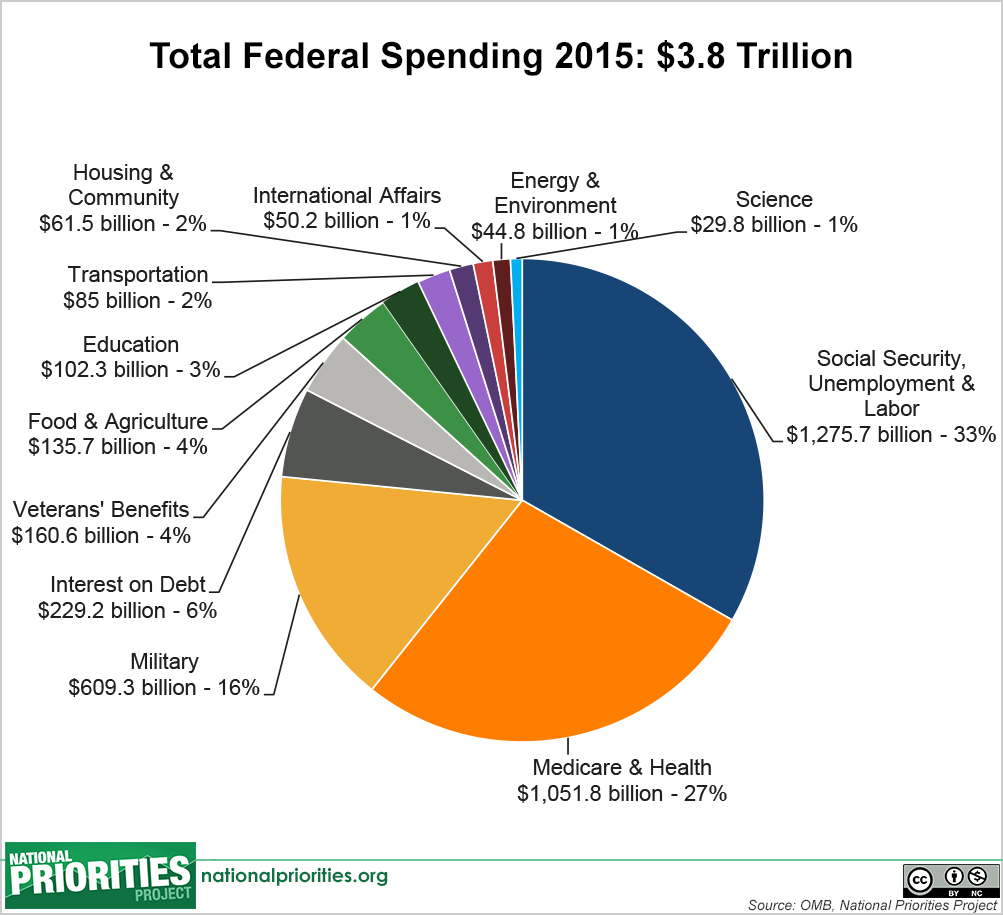
The main drawback to a minimum wage is that it artificially increases the cost of labor, to the point where it's no longer worth it to an employer to hire a low-output employee. I think we'd all agree that increasing employment is a good goal, but an increased minimum wage actually hinders progress on that front. As the minimum wage increases, robots and other non-human investments start to look much, much more attractive. Many businesses would be happy to hire workers for less than minimum wage, but legally cannot, and so do not hire.
Of course, it's a complicated issue. Look at the employment of those with disabilities like Down Syndrome [0], for example. Are these employees worth hiring at $7.50/hour? No, for the most part, they're not. Are some? Sure, but on average there's no way. But are they worth hiring at $2.00/hour? Yes, and they and their families are willing for them to work at that wage, because there are huge benefits to being productively employed.
Recently these programs are coming "under attack" in various states. New Hampshire just made this practice illegal, for example [1]. We'll see how it plays out -- my bet is that a) few news outlets will follow up in a few years and see how many of these disabled workers are able to find new employment, and b) few disabled workers will be able to do so.
[0] http://www.witf.org/news/2014/07/thousands-of-disabled-worke...
[1] http://www.care2.com/causes/new-hampshire-bans-subminimum-wa...