Atmospheric railways were attempted a few different times, with similarly bad results. This page has a quite a bit more detail about one of the attempts:
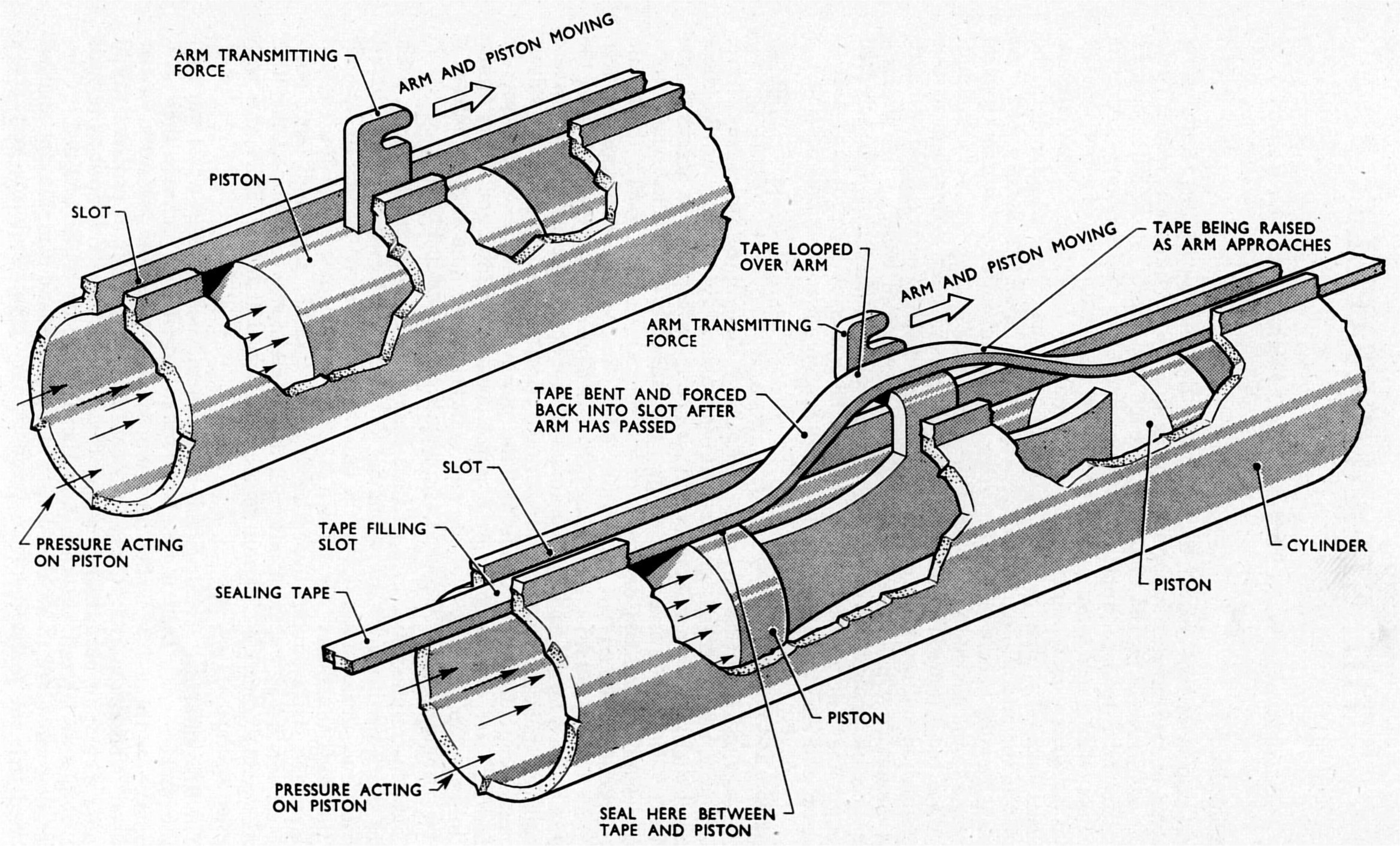
Rodless pneumatic have a long history of being headaches. Having to seal the slot with leather, wax, and tallow didn't help. Here's how a modern one works.[1]
There's a famous example of a large rodless cylinder application - the launch system for the V-1 "buzz bomb" of WWII. It didn't have enough engine power to take off without help, so it was launched from a ramp, propelled by a piston in a tube much like the atmospheric railways. Power came from steam, created by the reaction of hydrogen peroxide and potassium permanganate, a very volatile combination. The V-1 itself just ran on low-octane gasoline.
During WWII, some V-1 buzz bombs crashed in England without detonating, and were analyzed and duplicated in the US, as the "Loon". But the Allies didn't have access to a launch ramp (those being in enemy territory at the time) so they didn't know how the launch system worked. Amusingly, that was a good thing. A new launch system had to be invented. The result was a solid fuel booster for rocket-assisted takeoff. This allowed a much more effective launch setup, with a short takeoff rail instead of a huge fixed concrete ramp clearly visible from the air.
Aircraft carrier steam catapults are rodless piston steam systems. Same principle.[2] Some of the same headaches.


https://www.ianvisits.co.uk/articles/croydon-experimental-at...