Thomas Telford was another early civil engineer, among other things known for the Menai Bridge between the Welsh mainland and Anglesey. When I saw the bridge in 1999, it was kind of odd to think that this short-by-today's-standards bridge would pave the way for behemoths like the Mackinac - or that it dated to 1826 and has needed few major overhauls.
I had never even heard of Telford before my UK visit, although there is a town in Pennsylvania named for him. As always, there always seems to be national gaps in education.
Telford is also noted for his gates. They don't sag.[1] He was in the toll road business, and so, he had toll gates that had to be opened for each user. It was important to revenue that gates work well and not be left open. There are still some Telford gates in use, and they still don't sag after two centuries.
Telford's Pontcysyllte aqueduct is still in use and still the world's highest. Not bad for a civil engineering project started in the late 18th Century and completed 218 years ago (1805):
Telford was before Brunel (Pontcysyllte was completed a year before Brunel was born) and no doubt the latter took inspiration from him. Both were giants of the Industrial Revolution.
I'd be too long here to give reasons in detail but noticeable characteristics of much Victorian era engineering are its excellent workmanship and longevity and that even with inferior materials than we have today that many of these works have lasted much longer than many structures that are more modern.
Much of the reason had to do with the then prevailing attitude (the Industrial Revolution worldview) which was that they had a more long-term view coupled with pride—'see what we can now do' (often engeering was carried out to the best of its ability and done without shortcomings).
Also - material science and computation being less advanced, they just built bigger margins of error into everything that required resistance to force etc. Compare to today where everything is done to wafer-thin margins to minimise cost, hence fiascos such as RAAC.
Yeah right. Like many techies and engineers interested in the history of tech I've a book of Brunel's bio. Some people have instinctive genius and he was one of them.
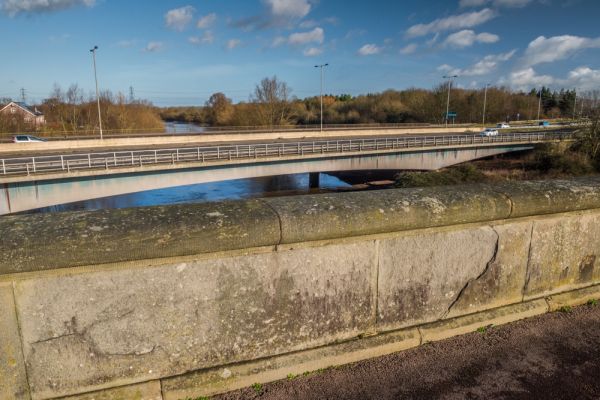
One can only guess at his reaction were he to know what was to come. Excitement at the strength of it? Disappointment at its tasteless design? The old Telford bridge makes a lovely footpath these days though.


I had never even heard of Telford before my UK visit, although there is a town in Pennsylvania named for him. As always, there always seems to be national gaps in education.