> We literally spend almost all day, every day, thinking about ourselves, in terms of our inner self.
> That is consciousness.
So thinking is consciousness?
Can there be consciousness without content? E.g. can I just be conscious of being conscious? If so, consciousness cannot be defined as the thing(s) we're conscious of.
> Can there be consciousness without content? E.g. can I just be conscious of being conscious?
Being conscious of being conscious means that there is content. You are conscious of something.
It’s a bit like a Gödel statement that quotes itself, that is a statement about itself. It doesn’t mean that it has no content.
Thinking isn’t consciousness. Consciousness doesn’t require thinking, it only requires perception. The perception of a process of perception within the same mind might constitute consciousness.
I don’t think thinking is consciousness, but I don’t see how consciousness operates without thinking.
Consciousness might feel like it’s an isolatable experience, but everything we experience is a result of processing it. Pause a brain and it isn’t experiencing anything,
We can be conscious without overt reasoning, but not without thinking. Thinking about ourselves and the experience is a basic component of the self-awareness in consciousness.
There's no chess spec, it's not "solved" like it's just a matter of implementation. Chess bot programming wouldn't be a thing otherwise. I think it's really quite funny that you think this super complicated game is just some trivial programming problem. Try it.
> Efficiency is about using minimum cpu cycles or minimum memory or minimum network round trip or more generically using minimum/optimum resources to get something done.
No profitable business wants to pay you for writing code that uses "a minimum" of a resource. It wants to pay you to find the right balance between resource usage, time-to-market, operating cost, code complexity and probably several other factors.
My understanding from a friend who has one of these machines is that while 120Hz works, VRR does not and so the panel can’t clock down to save battery life when you’re just idling staring at a terminal.
(Not that I know all that well how good Linux machines are at clocking down anyway - my XPS and desktop both have VRR panels, but for all I know Niri runs them at full bore at all times - haven’t tried to measure, wouldn’t even know where to start)
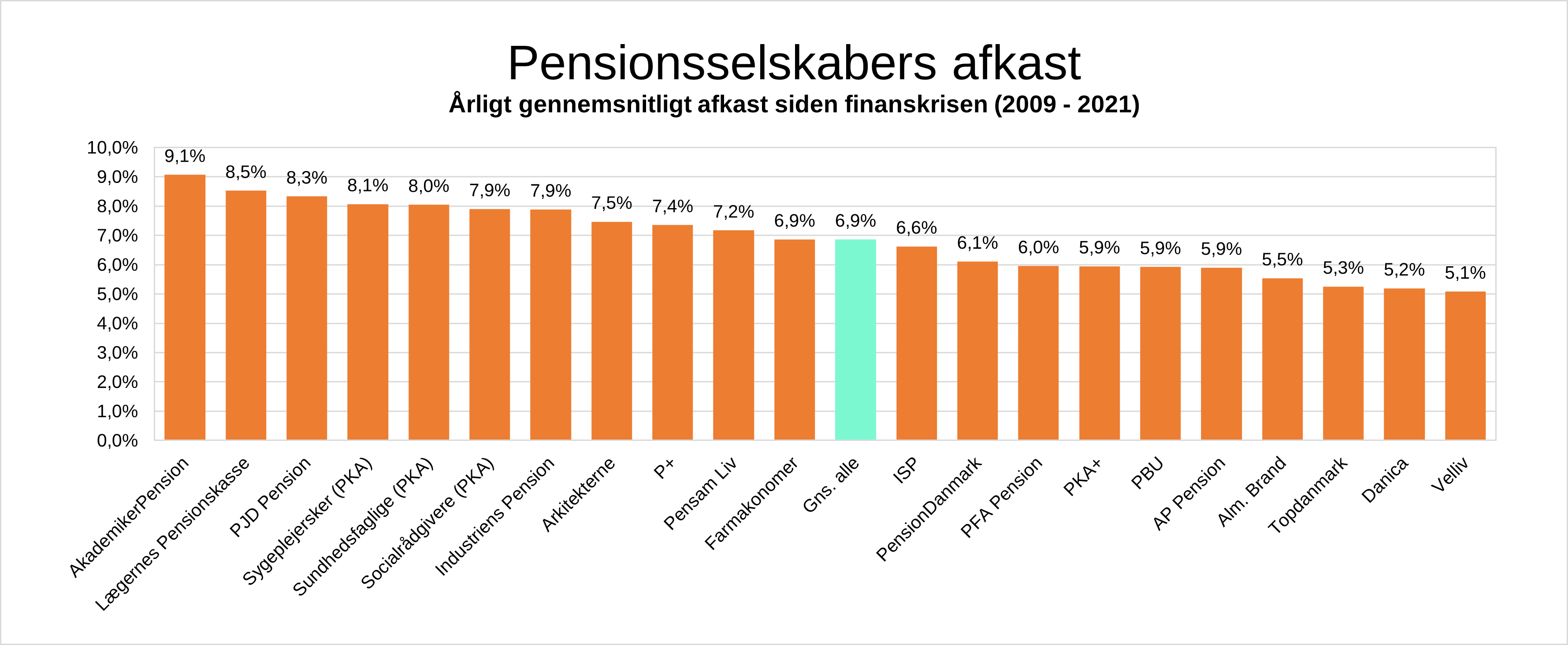
I wanted to see how well Akademikerpension has done wrt. returns. This graph shows average yearly return from the financial crisis 2009 until 2021 and they are actually the best performing among other Danish pension funds [1].
Judging a pension fund by how it performs in a bull market seems wrong. Like their main job is to limit your downside from market crashes (if they're not doing that then they offer nothing compared to an index fund), so its strange to not include 2008 crisis (or .com bubble popping).
Checking this shows that the top 2 performers in this graph lost more money (~8%) in 2008 than the bottom 2 (~2%)
well I agree, my point is that ie 2007-2021 is better than 2009-2021, and with my example I meant to illustrate that the best performers will perform less well and the poor performers perform better if you include 2008, showing that this does in fact matter.
Well, often you don't get to "dump" your pension fund. In Denmark, it is your employer deciding what pension fund to use, and you will then have to use it. It is kinda ridiculous.
AFAIK only pension contributions mentioned in a collective bargaining agreement is mandatory. If you get offered a regular contract offering a salary plus 10% pension you can accept the job, write an email to HR stating that you opt out and get the extra 10% as take home pay. You can the make voluntary pension contributions to whatever pension fund you have a private agreement with. And all the private pension companies are very happy to make such an agreement, though the terms will be worse than an employer plan from the same company. Or you could do a completely self-administered one, e.g. through Nordnet.
Why does everyone seem to assume that there is a finite amount of work available?
If all of the sudden it becomes possible to build a B2B company at 10x less cost which can save its customer, say, $1m per year and before this company cost $2m per year to run and now costs $200k, then it means before this was unviable and now it is viable — up to $800k profit a year now versus $1m loss per year before — then this increase in productivity has caused an increase in the number of available jobs.
Our economy would have collapsed a long time ago if an increase in productivity resulted in a decrease in employment.
Only the highest and lowest level jobs are available. Someone needs to report to shareholders and plan. If a PM can just write tickets and they get done, then you just need one PM.
Maybe this isn't practical today, but in 2, 5, 10 years? I still have to work 30-40 years before I retire, what do I do?
One argument may be that ownership is the last role for a human in a business. The firm exists to show ownership of an AI and provides a mechanism for managing its proceeds.
It’s still useful to get the information instantly and verify it later. Arguably asking someone you trust to read the number for you might be a better idea than calling the company. Not everybody has that option though.
Aaaand the logistics of making that call to the company to confirm the amount on the bill can get awkward. IVR and hold-time hell just to get a human to have to explain your predicament as to why you're asking for such a mundane piece of information that was in fifty other touchpoints that you couldn't access as quickly or easily.
(I'm also picturing the poor CSR at the other end of the phone wading through hundreds and hundreds of call logs over the years for simple requests and managers up above screaming 'why is this guy calling us all the damn time costing us money'...)
Once you paid the same bill for a few months you'll know how much your phone bill will roughly be and you'll not have to do. They obviously have to put that line in there, just like ChatGPT saying "Please verify everything we tell you" in the footer.
It might be useful if it remembered a bill for, say, 60 days, and could also comment on percent difference since the last one. "The total amount due on the bill is $83.89 which is 4% higher than last month's bill from the same company."


> That is consciousness.
So thinking is consciousness?
Can there be consciousness without content? E.g. can I just be conscious of being conscious? If so, consciousness cannot be defined as the thing(s) we're conscious of.
reply