Thank you! It's a particular style of sketchnotes that Tomomi, the artist, has perfected. They images all kind of fit together to give a holistic picture of the topic.
One thing, I did a lot of the smaller non-sketchnote art on https://aka.ms/ml-beginners, embedded as infographics. So that was a different art strategy.
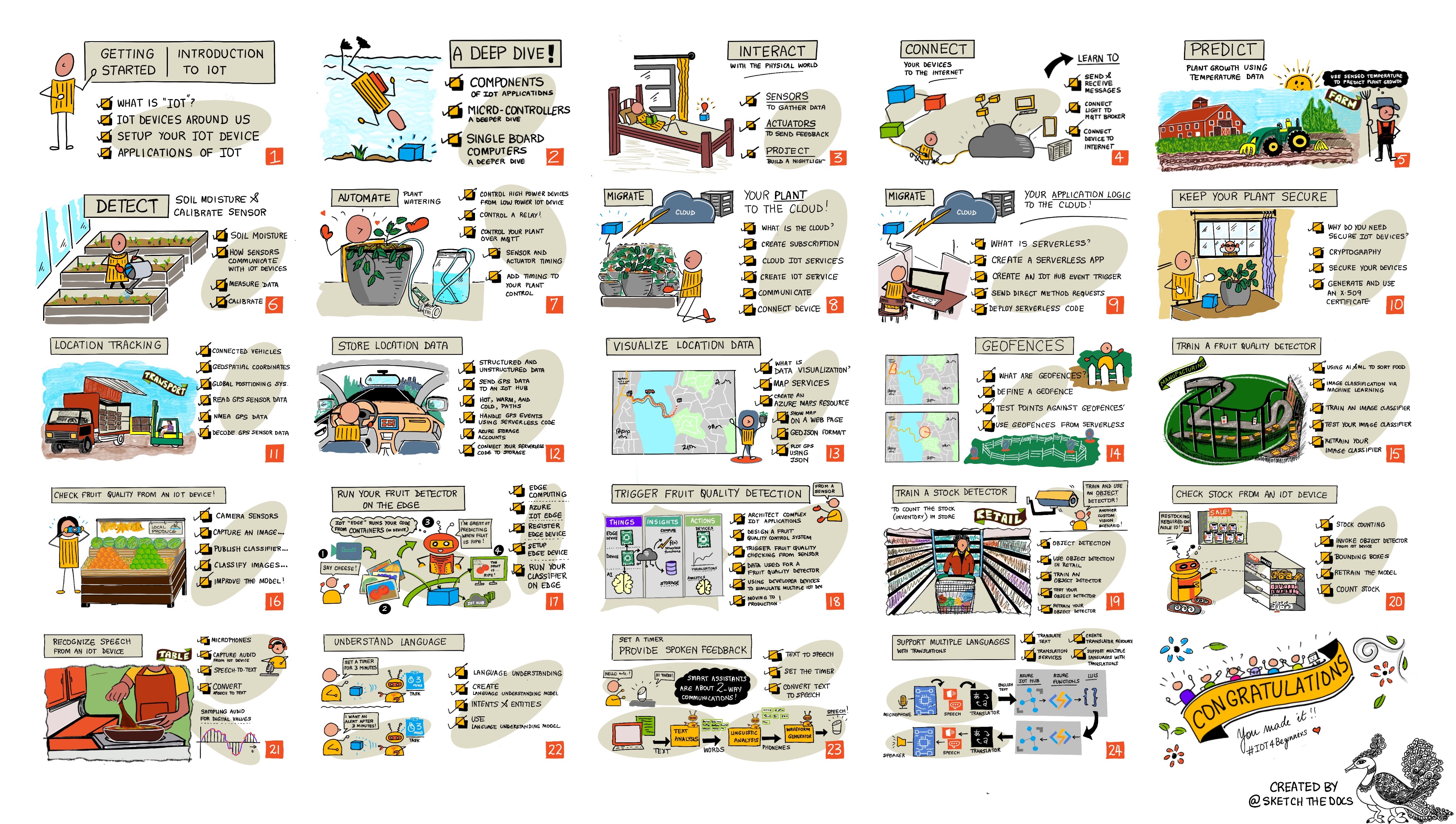
That example introduces a lot of visual clutter and inconsistency. I doubt anyone can make it from 1 to 24 and not feel exhausted.
Panel 4, "Deep dive into IOT" has an illustration of stick figure diving under water. I'm not sure the concept of "deep dive" requires the explanation.
Just want to thank you for your kind comments, it's making me happy :) - cheers from Jen, maintainer of these repos and curriculum designer / author at Microsoft
It looks great, thank you. I think it’s great to introduce accessibility early, but wouldn’t it be a good idea to have a brief introduction to HTML before the accessibility section? Or are you supposed to read about HTML on MDN as part of section 01?
Thank you! I've scanned over web development, looks like a well thought out modern curiculum. In 2022, it is tough to pick a good path for a beginner, and I like your choices.
Jen from Telerik DevRel here...we are working with Google to ensure that Angular 2 works great for your NativeScript apps. Please check our blogs at nativescript.org for forthcoming info on performance comparisons and how-tos. I'd encourage you to visit our getting started guide on the above web site to see how you like NativeScript!
Angular2's architecture is split in such a way that the rendering layer is separated from the application code. This allows swapping out the render layer - enables stuff like NativeScript and React Native renderers, server-side universal and running your app in a web-worker, dispatching to the main thread to render.


One thing, I did a lot of the smaller non-sketchnote art on https://aka.ms/ml-beginners, embedded as infographics. So that was a different art strategy.